123Inspiration
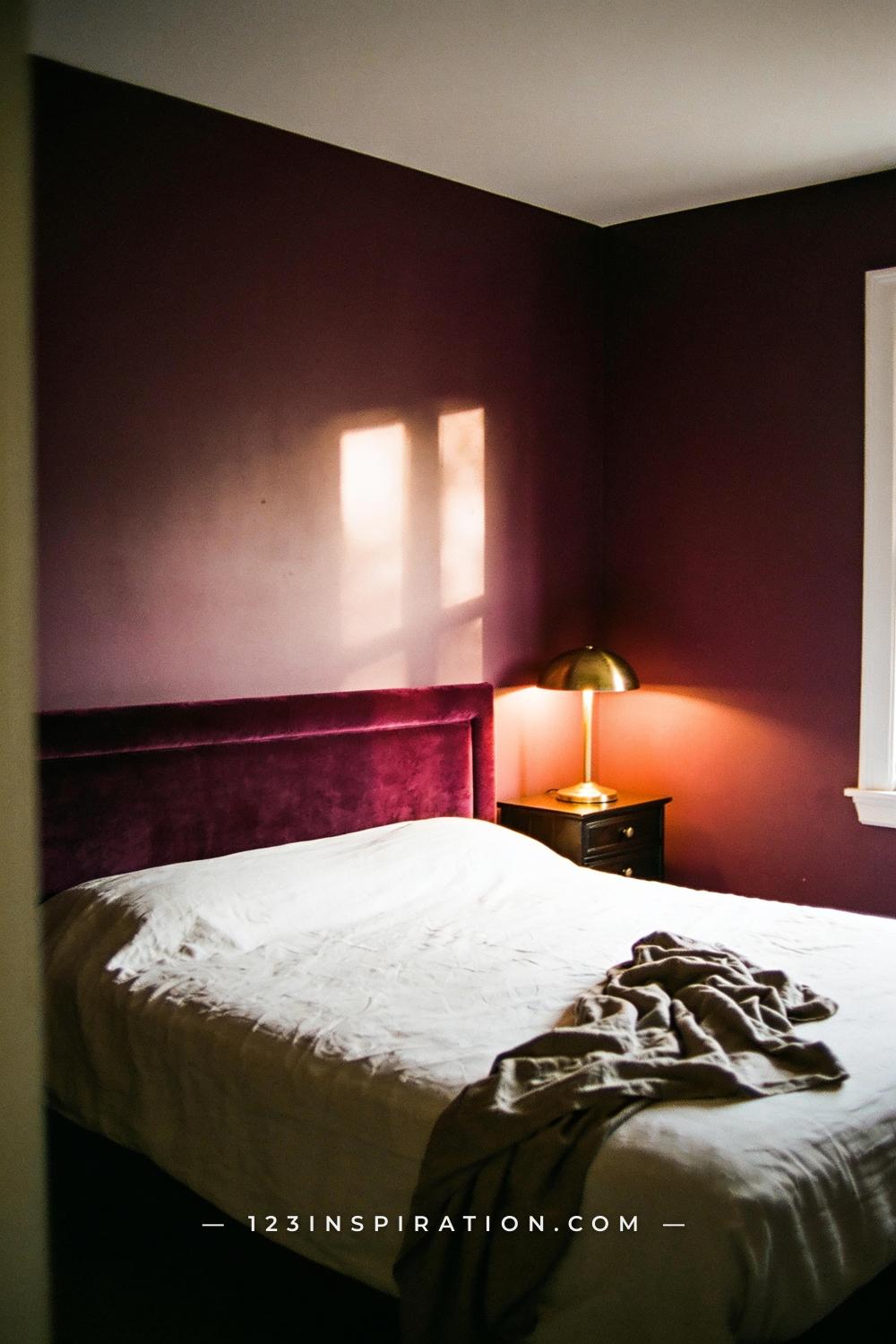
There’s a specific bedroom aesthetic that’s been quietly pulling people in for the past few years — and it has nothing to do with all-white linens or Scandi minimalism. Dark feminine bedroom design is moody, layered, and unapologetically sensual. Deep plum walls. Velvet everything. Candlelight bouncing off brass. It looks like the kind of room that has a whole inner life.
The hesitation most people have is understandable: what if it goes wrong and you end up with something that feels heavy, cold, or impossible to sleep in? That’s a real risk — but it’s almost always the result of skipping one or two specific decisions, not the dark palette itself.
This article covers the 13 moves that separate a dark feminine bedroom that feels genuinely romantic from one that just feels gloomy. These aren’t abstract mood boards. They’re specific, actionable choices you can make room by room, budget or not.
Start With One Dark Wall, Not Four
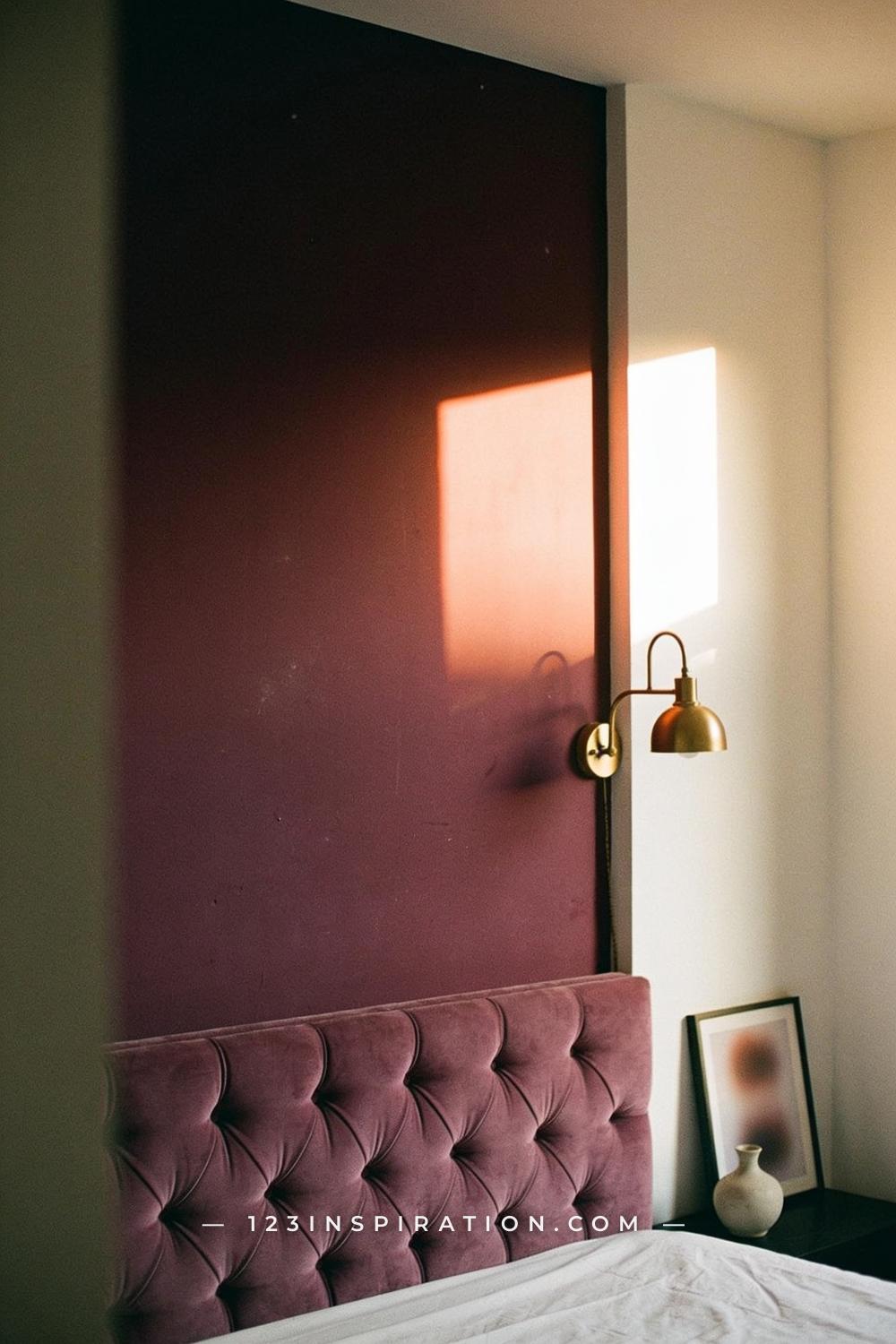
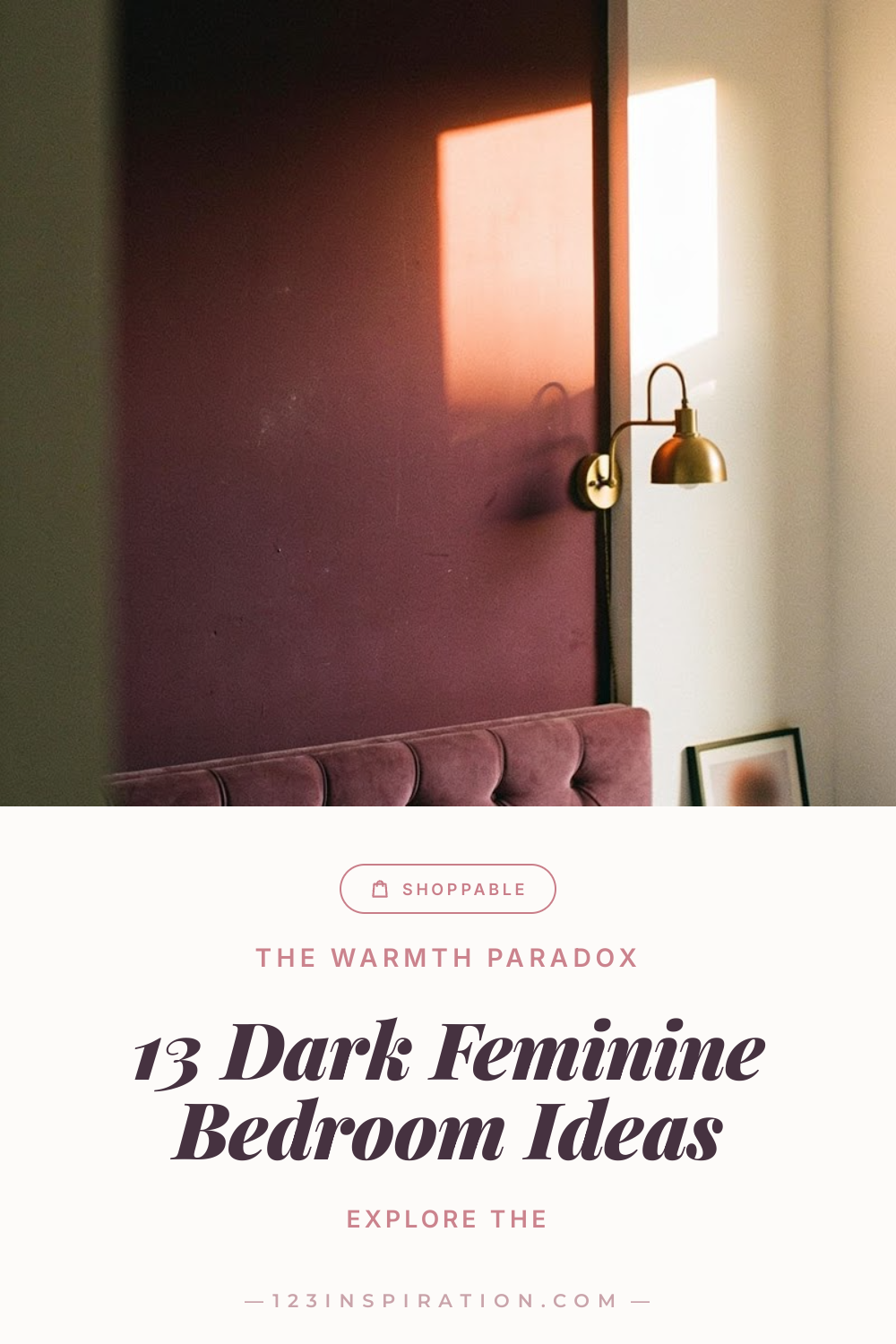
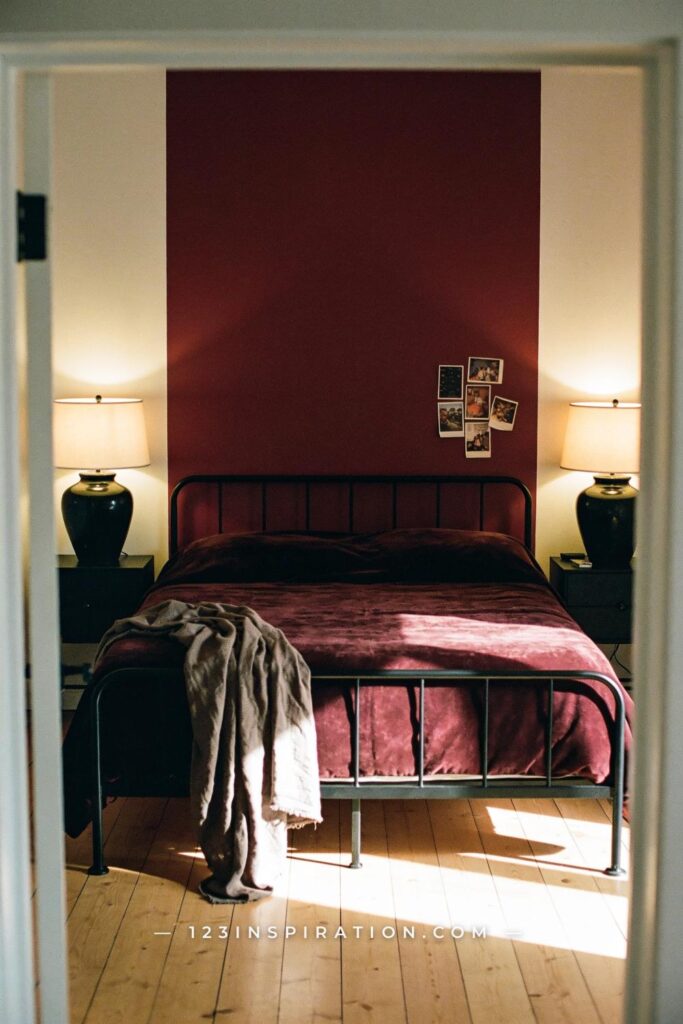
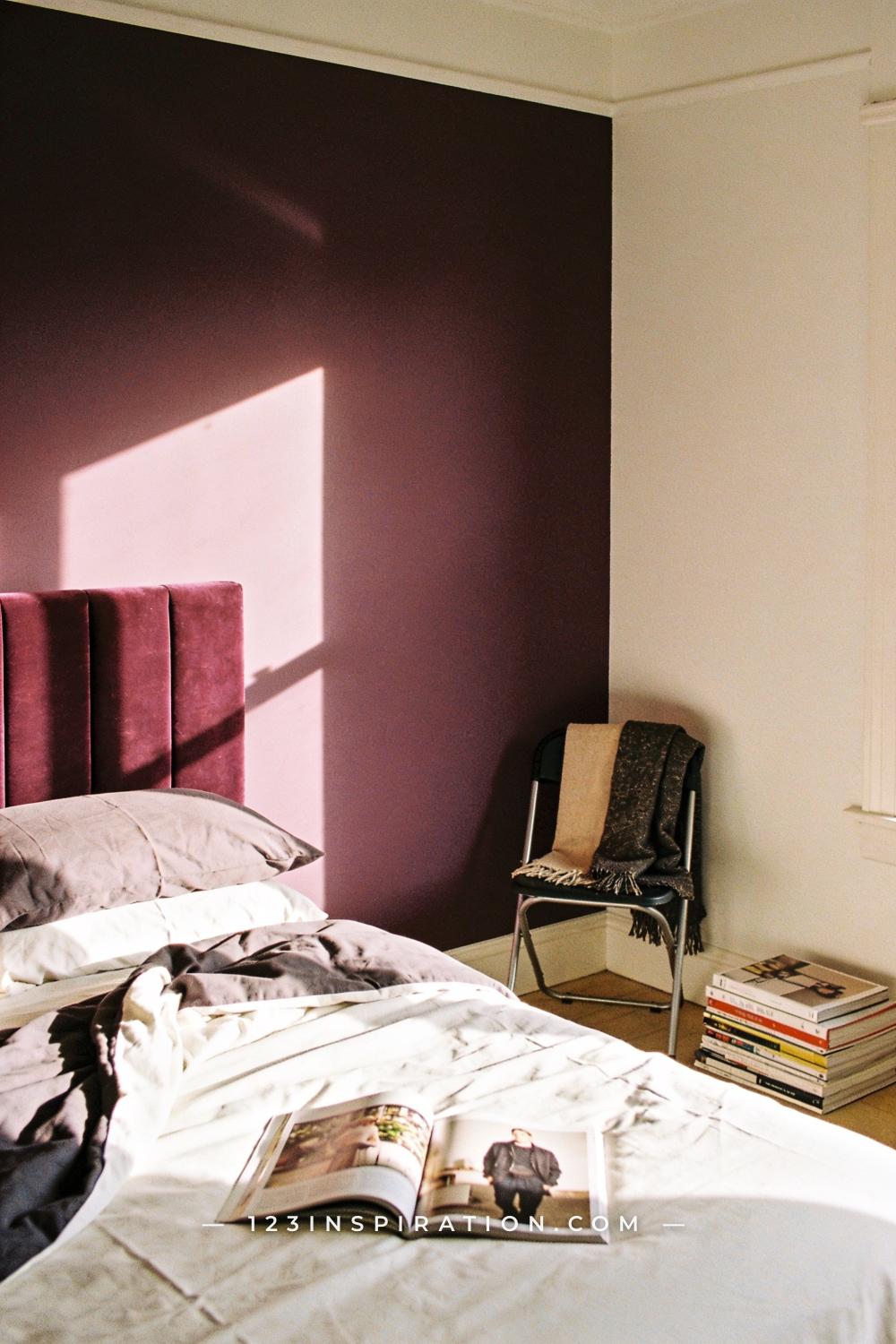
The most common mistake people make when attempting a dark feminine bedroom is going all four walls on the first try. One dark accent wall behind the bed does most of the heavy lifting: it creates depth, frames the bed like a stage set, and gives the room the moodiness you’re after — without making the space feel enclosed.
The color choice on that one wall matters enormously. Deep oxblood, midnight plum, forest green, and eggplant all read as “dark feminine” without veering into stark or cold territory. Sherwin-Williams’ Blackberry (SW 6284) and Benjamin Moore’s Witch Hazel (2117-30) are two verified options that have the warmth baked in — they read purple-adjacent in daylight and almost burgundy under lamplight.
Keep the remaining three walls a warm off-white, not a bright white. Bright white will fight the dark wall and make everything feel high-contrast in an unintentional way. Warm white — something with a cream or blush undertone — lets the dark wall do its job.
Key Takeaway: One dark accent wall behind the bed creates the full dark feminine effect; all four walls usually creates a cave.
Layer Three Types of Lighting (This Is Non-Negotiable)
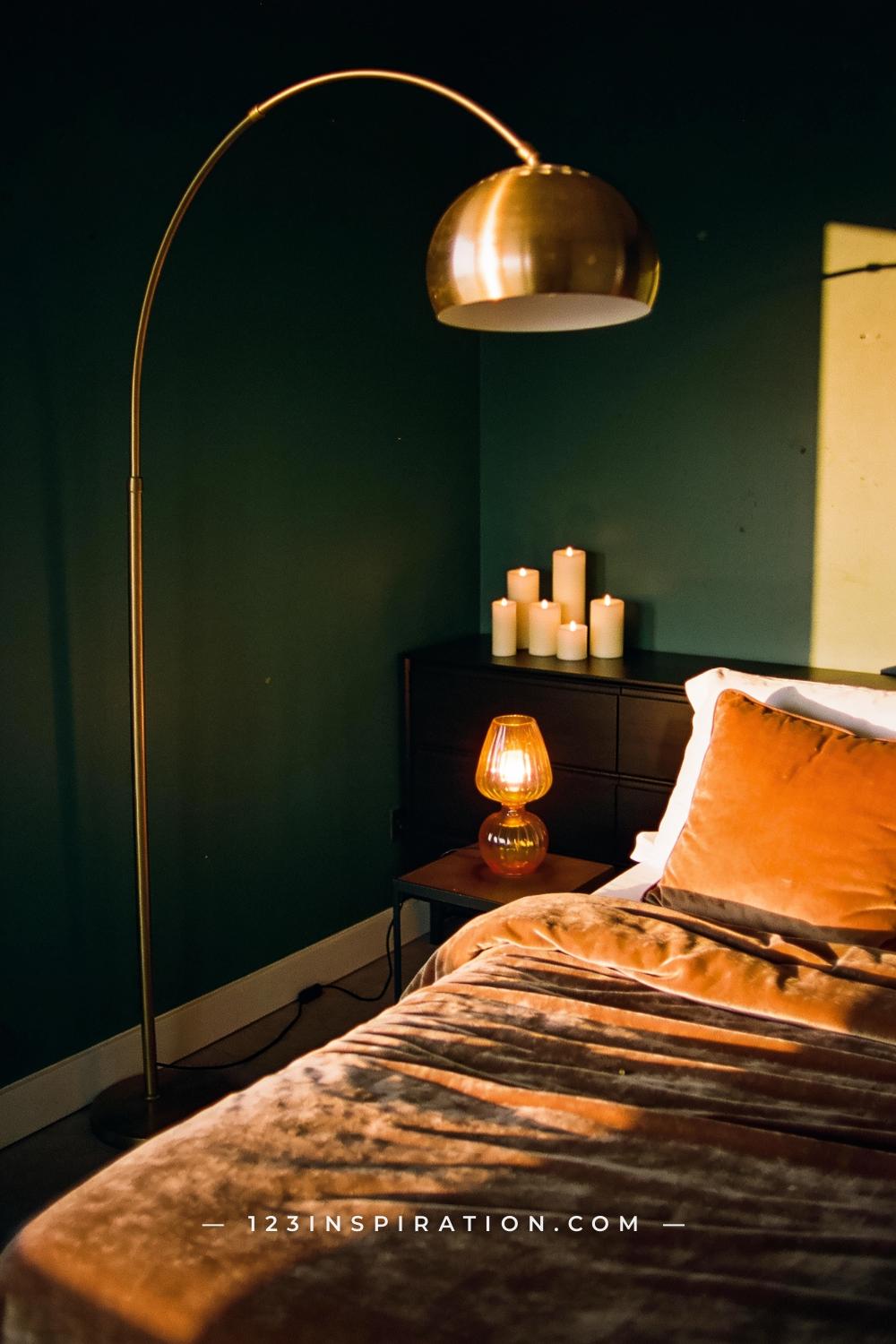
This is the single decision that makes or breaks a dark room. If your only light source is an overhead fixture — even a beautiful one — a dark bedroom will feel like a waiting room. The secret to a room that feels lush and warm instead of oppressive is layering three distinct light sources: ambient (overall fill), accent (directed onto surfaces), and task (bedside, functional).
For a dark feminine bedroom, the goal is to replace the overhead as your main light entirely. Two bedside lamps, a floor lamp, and a few candle groupings on the dresser will give you dramatically more control over how the room feels at different times of day. Warm-toned bulbs — 2700K or lower — are mandatory. Cool LED light will kill the warmth immediately.
Wall sconces on either side of the bed solve two problems at once: they free up nightstand space and they cast light in an upward or angled direction that flatters the dark wall behind the bed.
Key Takeaway: Three layered light sources at 2700K or warmer is what separates a moody bedroom from a dark one.
Choose Velvet for At Least Two Surfaces
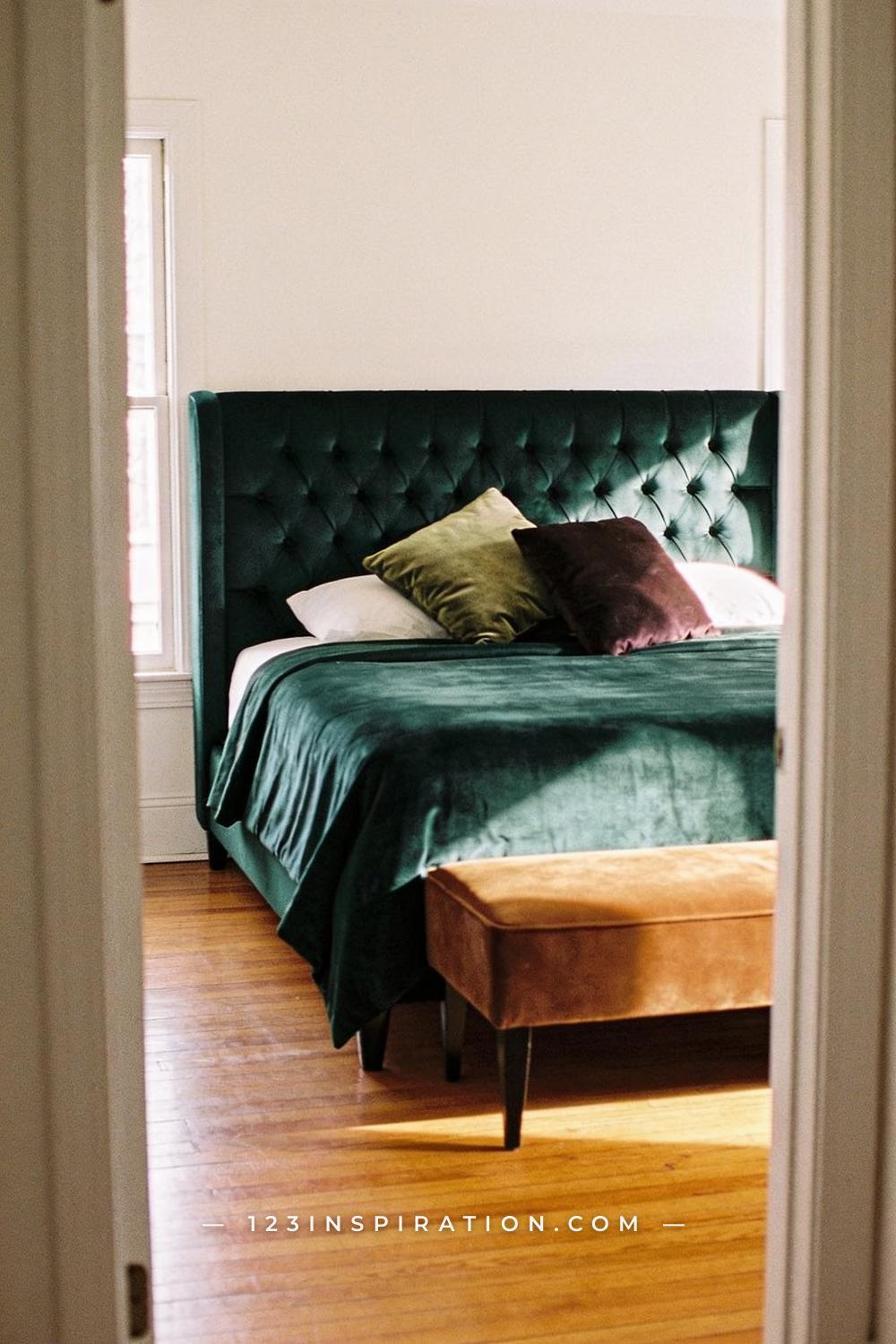
Velvet is the defining material of the dark feminine aesthetic, and the reason isn’t just visual — it’s tactile and optical. Velvet absorbs overhead light but reflects directional light, which means it shifts from deep and rich to almost luminous depending on the angle. In a dark room, that movement is exactly what prevents the space from feeling flat and heavy.
Two velvet surfaces is the minimum to make the aesthetic read. A velvet headboard plus velvet throw pillows is the easiest starting point, and it’s reversible — both can move to another room if you decide the direction isn’t right. A velvet upholstered bench at the foot of the bed is the upgrade move that makes the whole room feel more composed.
Color mixing within velvet works well here. You don’t need everything to match. A deep plum headboard with dusty sage throw pillows and a cognac bench creates the layered jewel-tone effect that defines the aesthetic at its best.
Key Takeaway: Velvet on at least two surfaces gives the room its characteristic luminous-and-deep texture shift — one surface alone rarely reads.
Bring In Warm Metals, Not Chrome
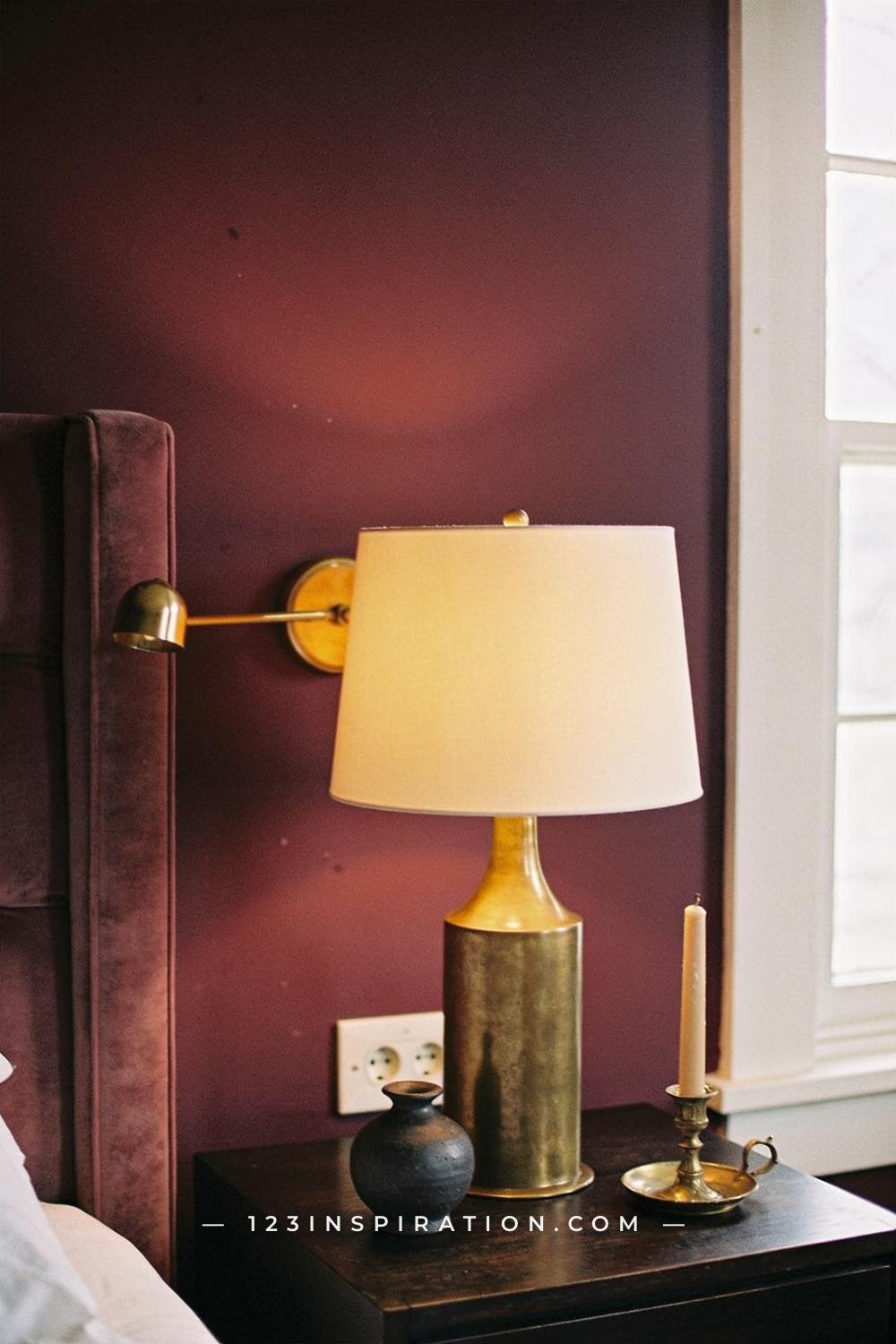
Metal finish is one of the most overlooked decisions in a dark feminine bedroom, and it’s one of the most consequential. Chrome and brushed nickel read as cool and modern — they fight the warmth that makes this aesthetic work. The metals you want are brushed brass, antique gold, and aged bronze. All three absorb and reflect warm light in a way that makes the room feel richer, not heavier.
You don’t need to replace hardware and fixtures all at once. Start with what’s most visible: bedside lamps, drawer pulls, and candle holders. These are the items that catch the eye in a dark room and either reinforce the warm, romantic quality or undercut it. Brushed brass is the most versatile of the three — it reads vintage without being precious, and it plays well against every dark wall color in the palette.
Avoid mixing warm and cool metals in the same room, at least initially. Brushed brass next to chrome looks like an oversight, not a deliberate choice.
Key Takeaway: Warm metals — brushed brass, antique gold, aged bronze — are what keep a dark room feeling lush rather than cold.
Use Deep Jewel Tones, Not Just Black
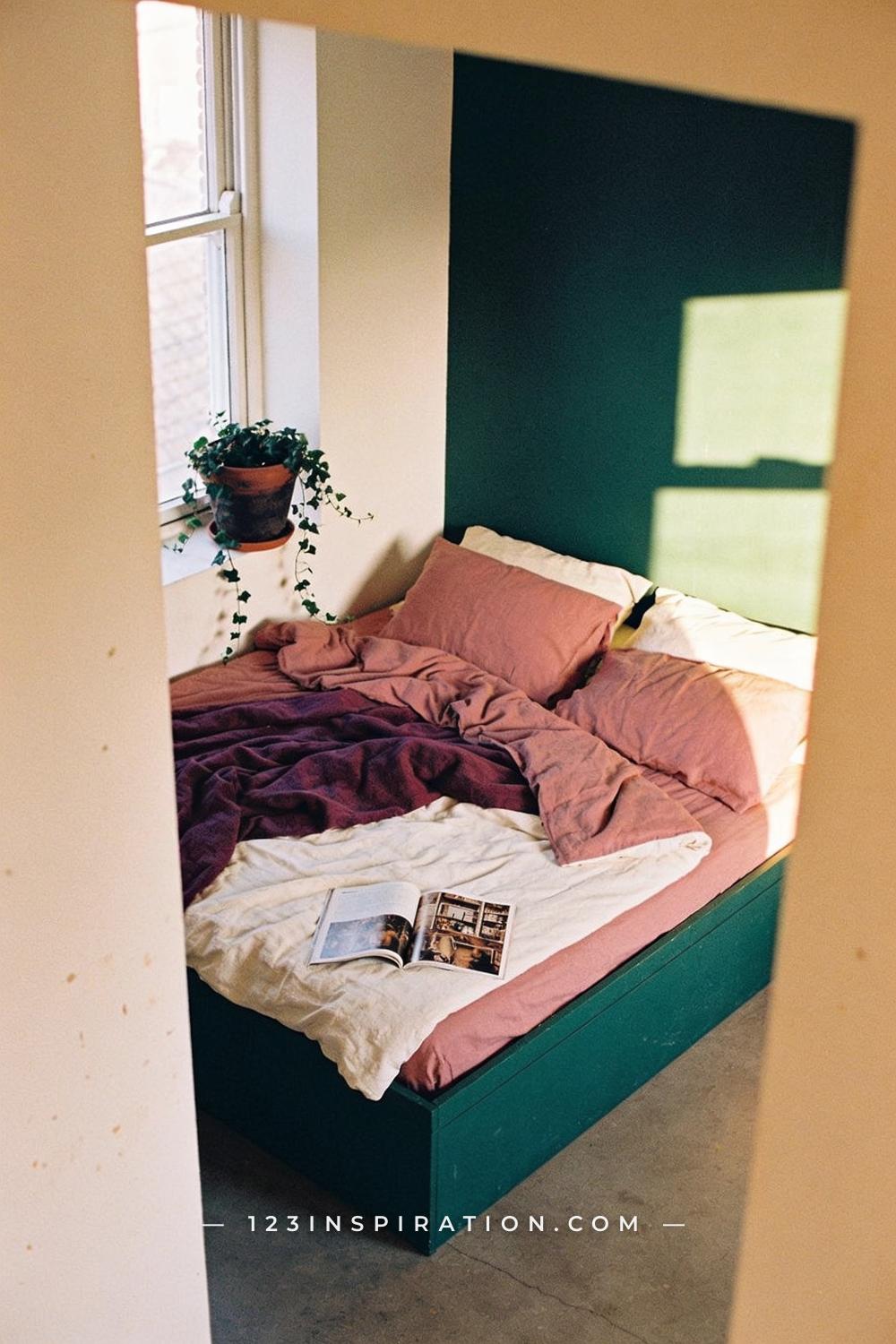
There’s a version of “dark feminine” that tips into all-black and ends up feeling more punk than romantic. The aesthetic you’re actually after is built on jewel tones — colors that have warmth and chromatic depth to them: plum, oxblood, deep emerald, midnight navy, aubergine. These colors behave entirely differently from black under warm light: they shift, they glow, they create a sense that the room has color rather than just absence of it.
The reason jewel tones work in this aesthetic is precisely because they’re dark and warm simultaneously. Benjamin Moore’s Blackberry Jam (2072-10), Farrow & Ball’s Brinjal (222), and Sherwin-Williams’ Grape Harvest (SW 6285) are verified colors in this range that have been used in editorial bedroom features in 2025 and 2026. Each one reads differently across the day — almost berry-bright in full sun, deeply moody under lamplight.
Black accents are fine — black frames, a black table lamp base, matte black hardware. But black as the dominant color tends to flatten a room. Jewel tones give it life.
Key Takeaway: Jewel tones are the foundation of dark feminine — not black; they hold warmth and shift beautifully under layered light.
Add a Canopy or Draping Detail Over the Bed
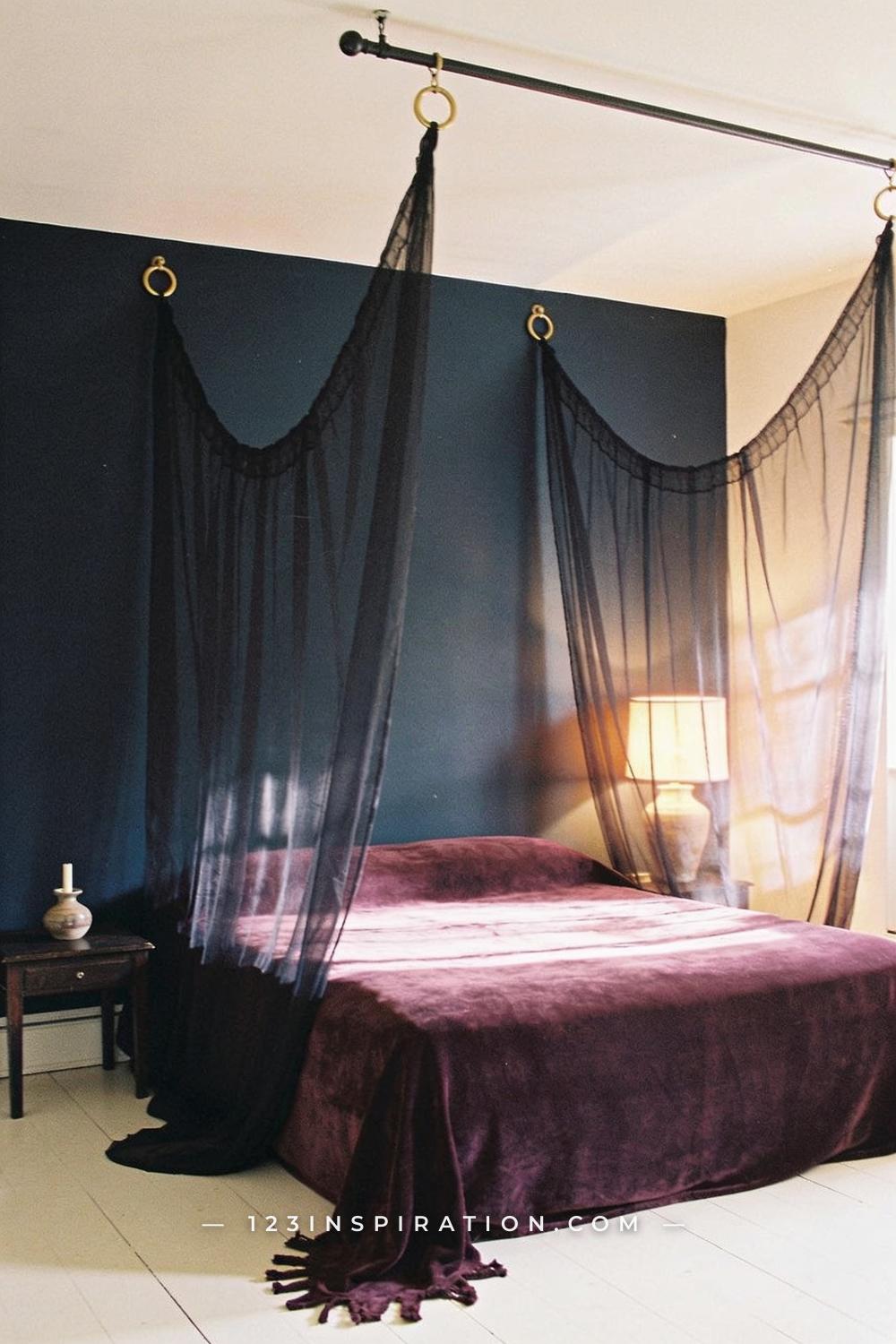
Of all the details that make a dark feminine bedroom feel intentional rather than accidentally dark, a canopy or draping element above the bed is the one that earns the most saves on Pinterest — and it’s also one of the easier things to actually execute. Even renters can ceiling-mount a simple tension rod or use adhesive hooks to support lightweight gauze panels.
Dark sheer fabric — deep charcoal gauze, dusty mauve muslin, or even soft black voile — works better in this context than a traditional white canopy. The goal isn’t a princess aesthetic; it’s an enveloping sense of shelter and drama. The fabric doesn’t need to form a full tent — even two side panels that frame the headboard add significant visual weight and romanticism.
IKEA’s Sanela velvet curtains repurposed as bed draping, or Amazon’s gauze canopy panels, are both low-cost ways to try this detail before committing. The effect in photos — and in person — is disproportionate to the effort.
Key Takeaway: A dark gauze canopy or draping detail above the bed is the single highest-impact visual move in a dark feminine bedroom.
Weekly Inspiration
1000 ideas, one home at a time
Ground the Room With a Dark, Textural Rug
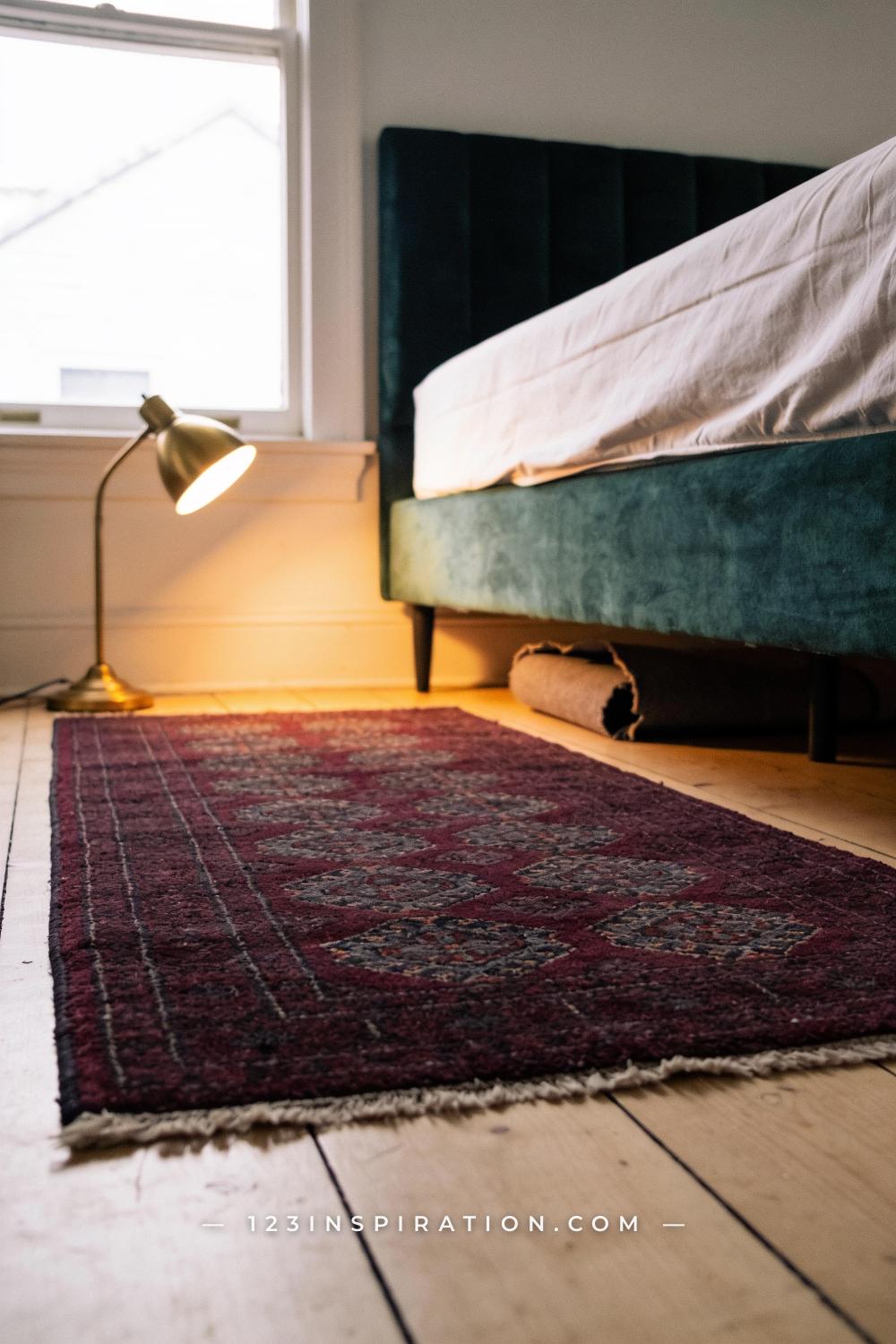
The floor is often ignored in a dark feminine bedroom, and it shows. A pale or beige area rug underneath the bed signals that the design commitment stopped at the walls and the headboard. A dark, textural rug — deep burgundy, charcoal, forest green, or a pattern that mixes those tones — is what anchors the whole room and signals that the aesthetic was thought through from the ground up.
Pile and texture matter here. A flat-weave rug in a dark color will absorb light without reflecting any of it back, which can make the floor plane feel like a void. A plush or medium-pile rug in a jewel tone will catch the lamplight the same way velvet does — showing texture and depth rather than just darkness. Persian-adjacent patterns work exceptionally well in this aesthetic because they add visual complexity that plays against solid dark walls without competing.
The rug should be large enough that at least the front two legs of the bed sit on it — and ideally all four legs plus some breathing room on the sides. Undersized rugs are one of the most common proportion mistakes in any bedroom.
Key Takeaway: A dark, plush, large-format rug grounds the whole aesthetic; a light rug underneath a dark room reads like a decorating afterthought.
Introduce Organic Shapes to Soften the Drama
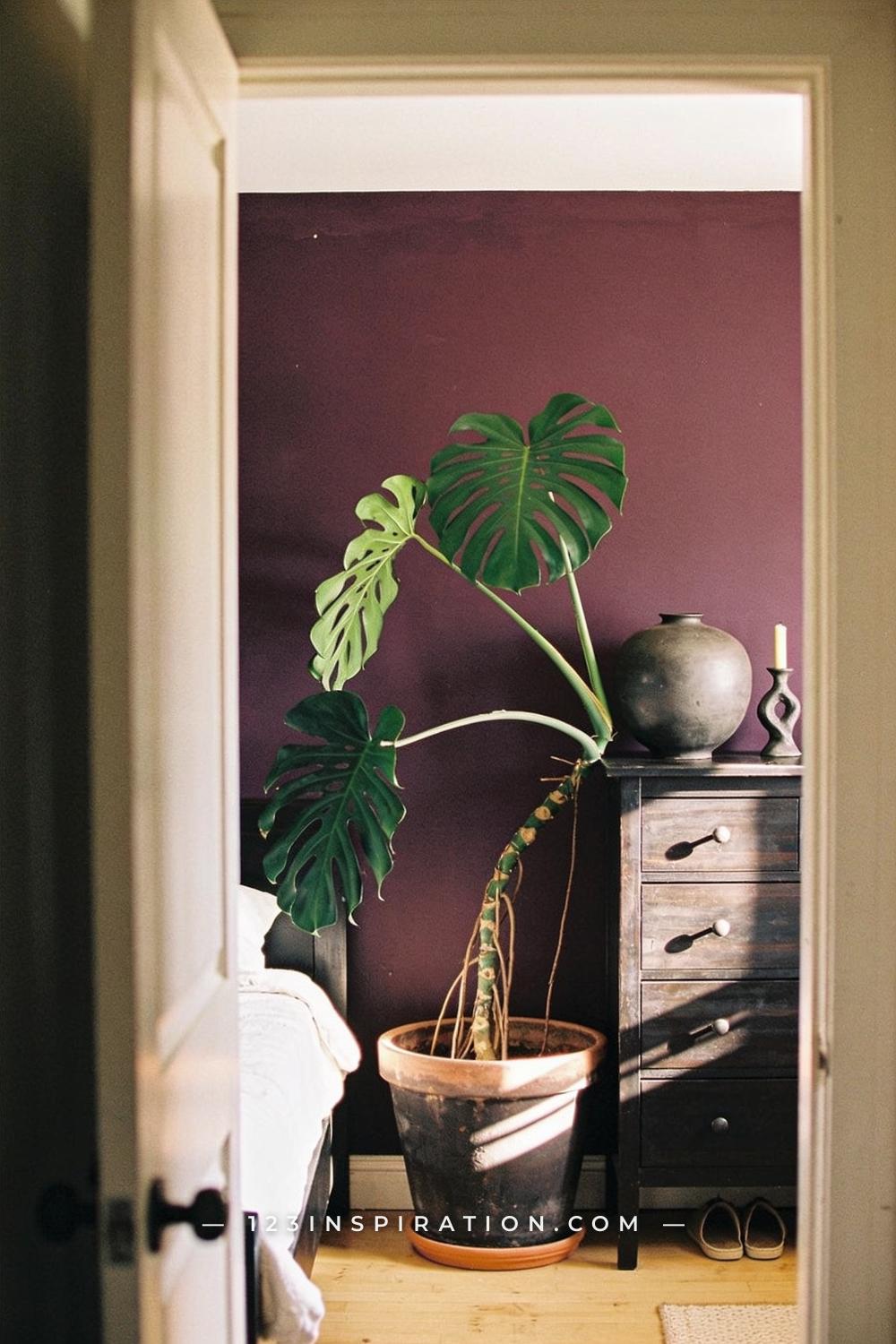
Dark rooms need organic shapes or they start to feel architecturally severe. This is the element that most Pinterest-perfect dark bedrooms miss: the softening effect of curves, plants, and irregular forms against all the hard, angular drama of a jewel-toned palette.
Tall plants — a fiddle leaf fig, a snake plant, an olive tree — bring vertical organic movement into a dark room without taking up floor space footprint. Their silhouettes against a dark plum or emerald wall feel almost theatrical in the best way. A tall, slender plant in a matte black or dark terracotta planter in a bedroom corner is a reliable composition anchor.
Beyond plants, curved ceramics — round sculptural vases, globe table lamps, arched candle holders — introduce organic shapes on smaller surfaces. The principle is contrast: the more geometric and architectural the dark wall palette feels, the more important it is to bring in objects that resist straight lines.
Key Takeaway: Organic shapes — plants, curved ceramics, globe lamps — are the visual counterweight that keeps a dark feminine room feeling alive rather than cold.
Layer Bedding in Tonal Jewel Tones
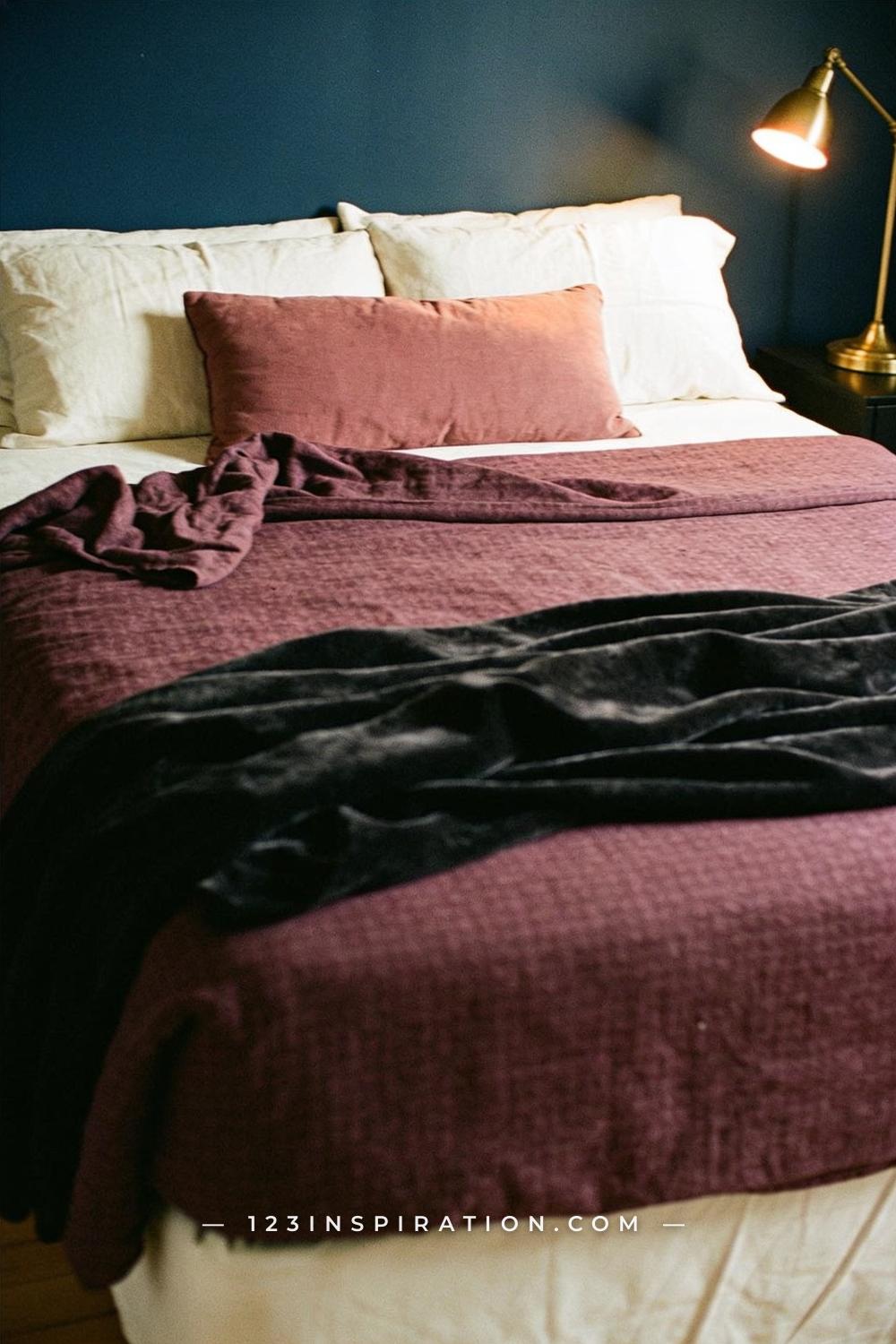
The bed is the focal point of a bedroom, which means the bedding is where the dark feminine aesthetic either comes together or falls apart. The approach that works is tonal layering: multiple pieces of bedding in related jewel tones, different textures, pulled together rather than matched.
A deep plum or midnight blue duvet as the base layer, with ivory or warm-white linen pillowcases as the light foil, is the most versatile starting combination. Add a velvet throw at the foot of the bed, one or two lumbar pillows in a contrasting jewel tone (dusty rose and deep emerald work together more naturally than you’d expect), and you have a bed that looks composed without looking decorated.
Matching sets — same color, same fabric across every pillow and sheet — kill the layered quality that makes dark feminine bedrooms feel richly personal. The goal is for the bed to look like it was built over time, not ordered as a bundle.
Key Takeaway: Tonal jewel-tone layering in mixed textures and near-matching colors reads as intentional depth; perfect matching sets read as flat and catalog-like.
Use an Arched Mirror to Add Light and Architecture
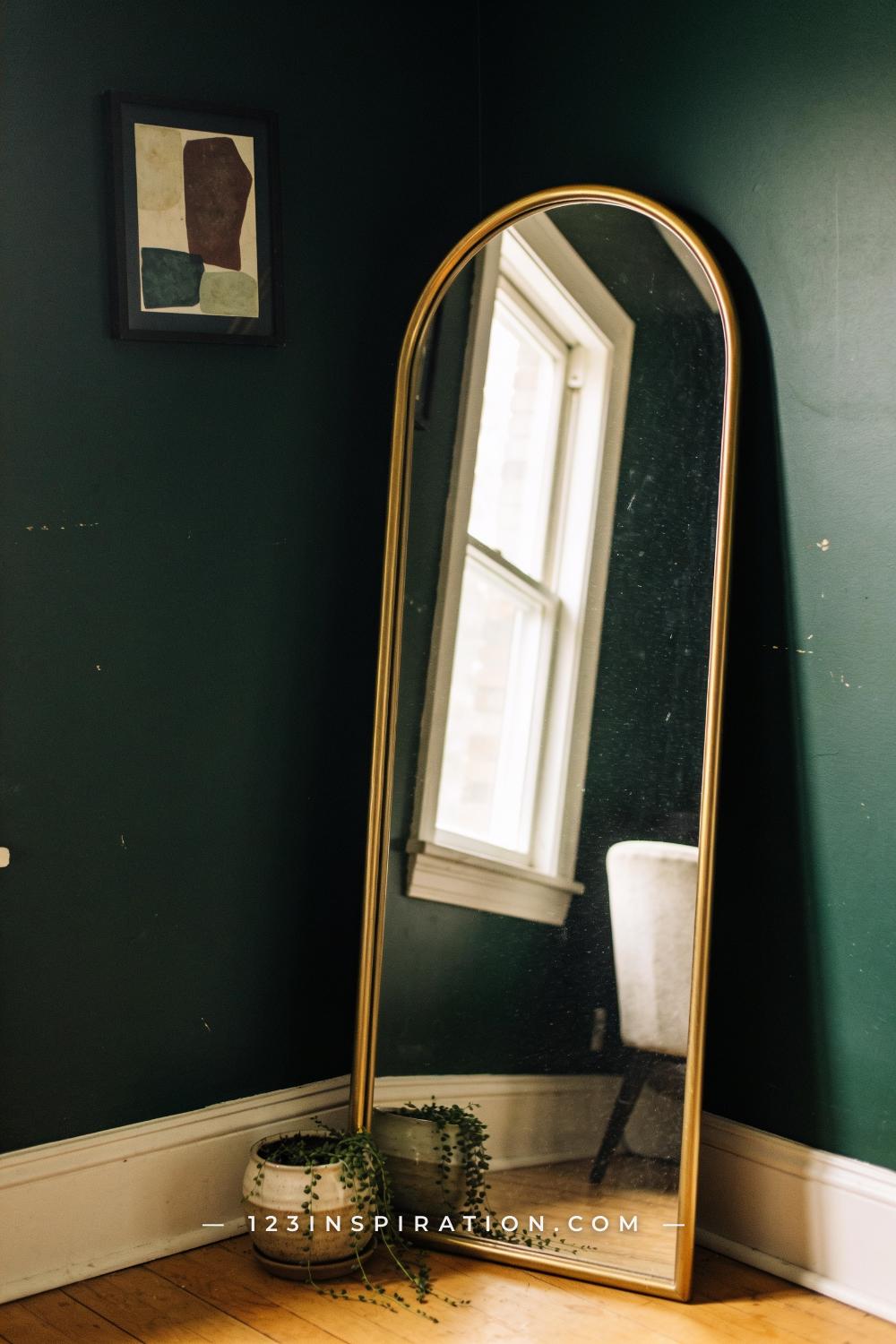
A tall arched mirror does two things in a dark bedroom that nothing else can: it bounces light back into the room, countering some of the light absorption of the dark walls, and it introduces an architectural element that elevates the whole composition. An arched top reads as romantic and slightly classical — perfectly aligned with the dark feminine aesthetic — without requiring any architectural renovation.
The best placement is opposite or adjacent to the primary light source — a window or a floor lamp. Positioned correctly, an arched mirror can make a 10×10 room feel dramatically larger and more luminous. Leaned against the wall rather than mounted gives it a lived-in quality that feels appropriate for the aesthetic; mounted flush is more formal and structured.
Slim brass or antique gold frames are the right choice here. A thick black frame will disappear against a dark wall. A gold or brass frame will read clearly and reinforce the warm metal palette you’ve established elsewhere in the room.
Key Takeaway: An arched mirror in a brass or antique gold frame placed opposite a light source is one of the most effective ways to prevent a dark room from feeling enclosed.
Incorporate Scent as a Design Layer
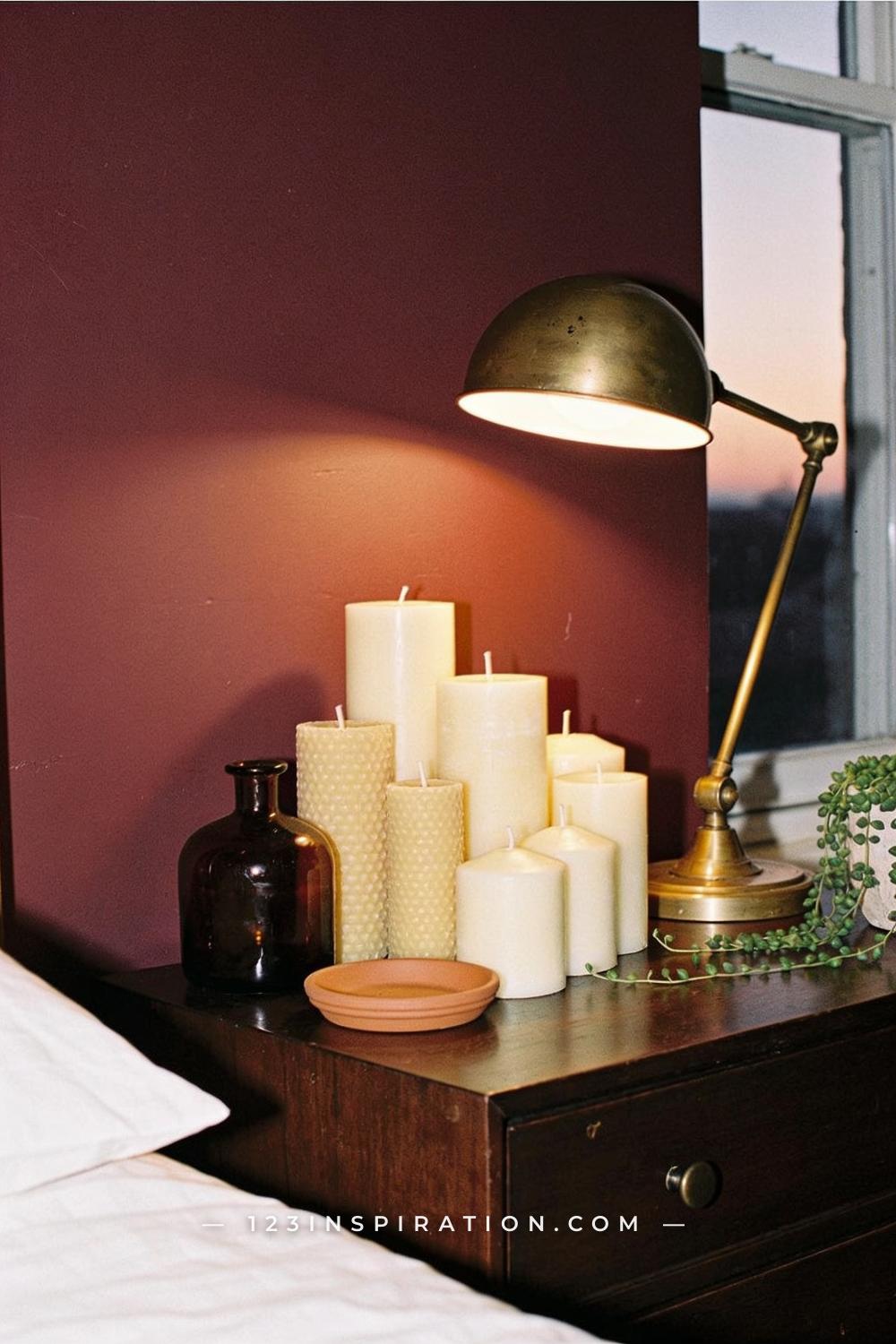
This one reads as an odd inclusion in a visual article, but scent is one of the most underrated design tools in a dark feminine bedroom. The rooms that feel genuinely transporting — not just visually moody but atmospherically complete — have a scent layer that reinforces the visual mood.
Candles in a dark bedroom serve double duty: they’re a valid light source (a cluster of pillar candles on a dark wood surface creates some of the most flattering light possible in a bedroom) and they’re a scent vehicle. Dark, complex scents — oud, amber, dark rose, sandalwood, incense-adjacent — reinforce the aesthetic without any extra visual work. Lighter florals and citrus do the opposite.
The display of candles also matters. A single candle on a nightstand looks sparse in a dark room. A curated cluster of pillar candles at varying heights on a dark tray reads as intentional styling. They don’t need to be expensive — scale and arrangement do more than brand.
Key Takeaway: A scent layer using dark, complex fragrances delivered through a clustered candle display completes the dark feminine atmosphere that visuals alone can’t fully achieve.
Don’t Finish the Room All at Once
The dark feminine bedrooms that feel most authentic — the ones that get saved thousands of times on Pinterest — were almost never designed all at once. They were built incrementally, piece by piece, each new element making the others look more intentional. This is actually the right strategy, not just a budget compromise.
When you finish a dark feminine bedroom in one shopping cart, you end up with a room that looks like a packaged aesthetic rather than a personal one. The difference between a room that feels lived-in and one that feels like a display is almost always the evidence of time: a lamp found at an estate sale, a throw blanket inherited, a vase from a trip, sitting next to something bought last week.
Practically, this also means you can test the dark wall before buying the rug, adjust the lighting before committing to the canopy. Getting the bones right first — one dark wall, layered lighting, warm metals — gives you a strong foundation to layer onto over months, not a project that has to be solved in a weekend.
Key Takeaway: Building the room over time produces the authentic, personal quality that no single shopping session can replicate — and it gives you space to course-correct before over-committing.
The dark feminine bedroom aesthetic is one of the few design directions where restraint and boldness coexist — you need the commitment to go dark, but the discipline to add warmth at every turn. Start with the accent wall and the lighting layer. Get those two right and the rest of the room has somewhere to build toward. Add velvet, warm metals, organic shapes, and layered bedding in whatever order makes sense for your budget and timeline.
What you’ll find, once the room starts to take shape, is that it doesn’t feel oppressive at all. It feels like the most considered room in your home — the one that actually reflects how you want to feel in your own space at the end of the day.