123Inspiration
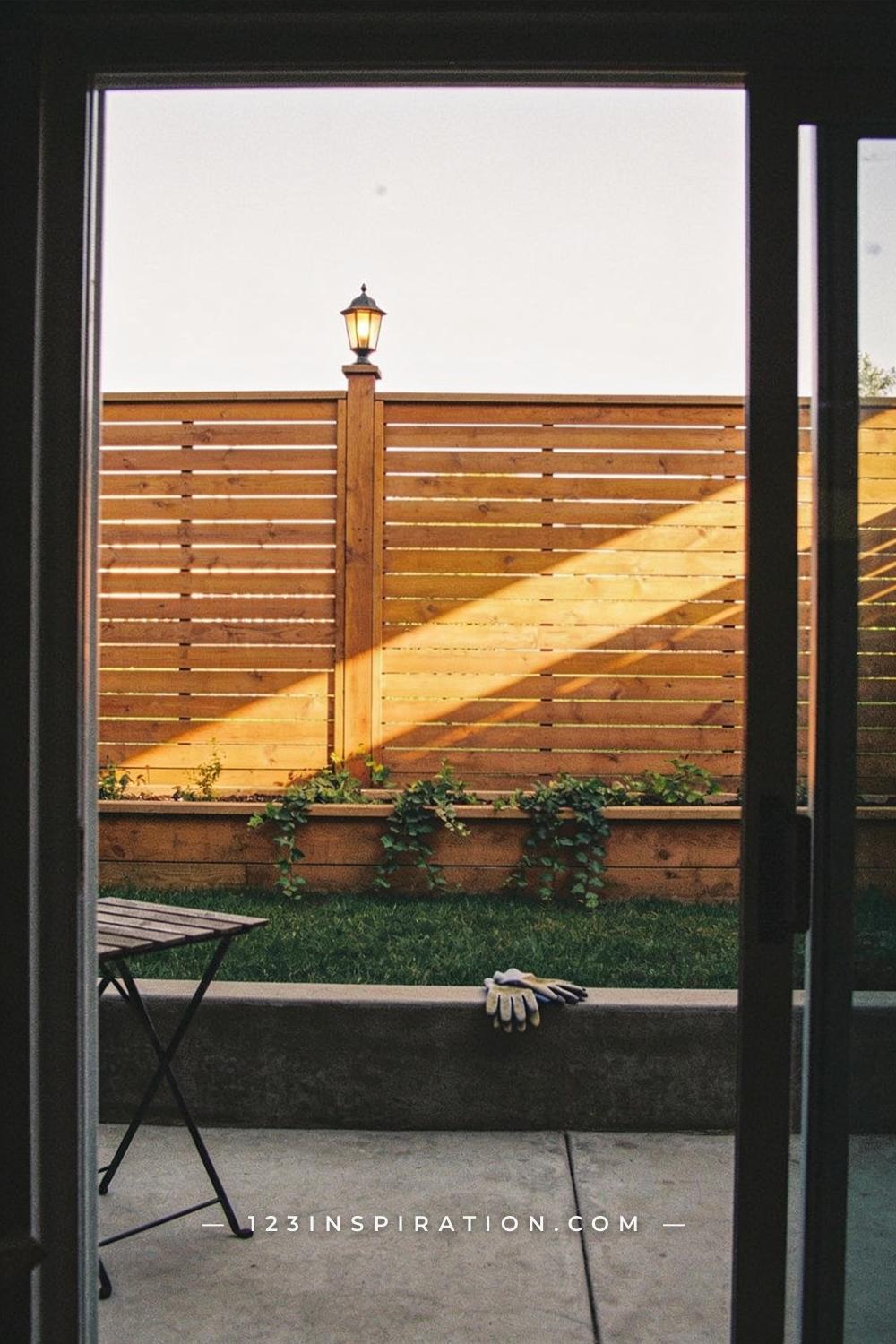
Most backyard fences do one thing: keep people from looking in. What they don’t do — and what this article is entirely about — is make the yard look good. A fence takes up more visual real estate than almost any other element in your outdoor space. It forms the backdrop behind your furniture, your planters, your fire pit. If it looks like an afterthought, the whole yard does too.
These 15 modern privacy fence ideas are chosen specifically for homeowners who want the enclosure and the aesthetic — the kind of fence that looks like it was designed alongside the yard, not just installed to satisfy a neighbor dispute.
1. Horizontal Cedar Slat Fence
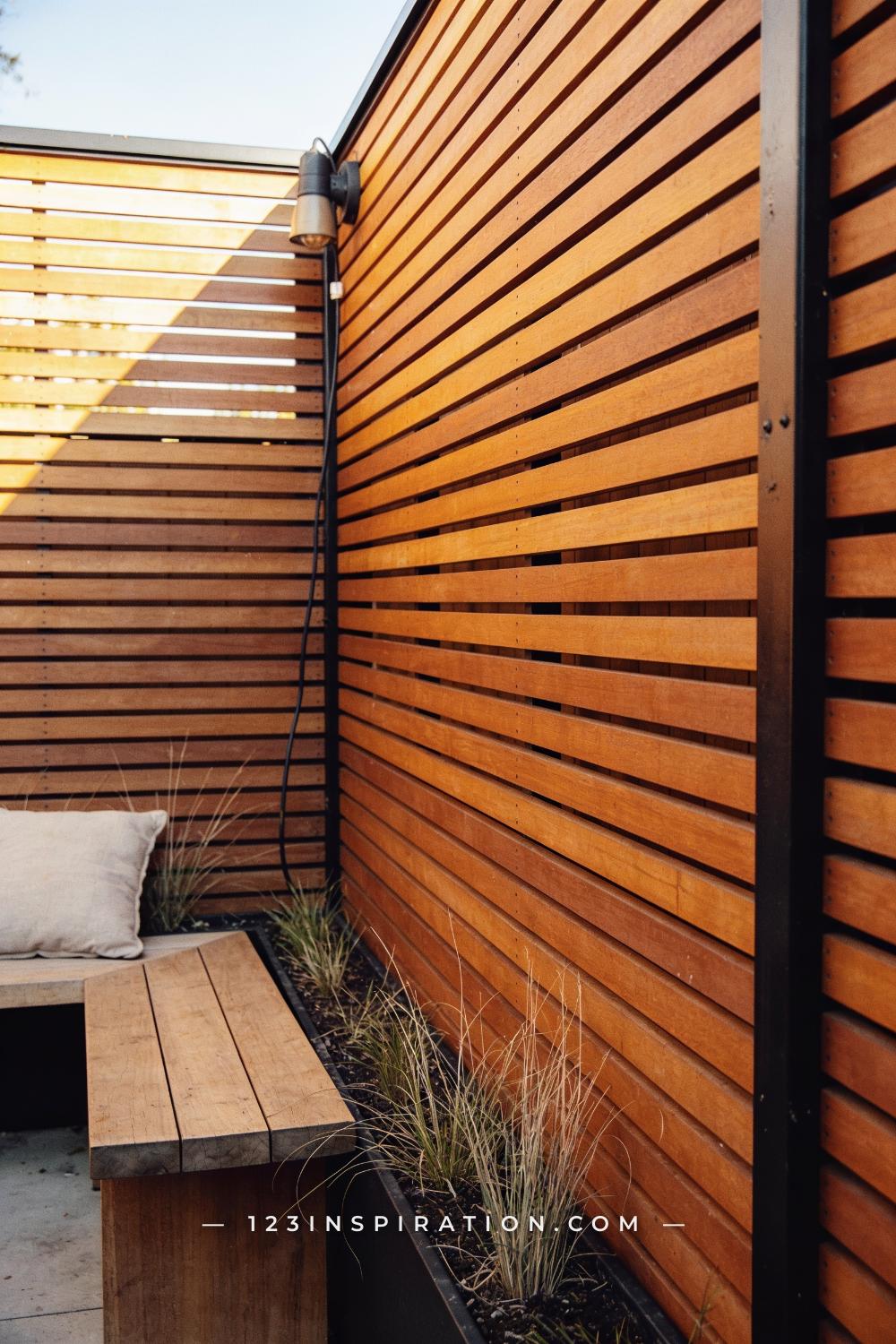
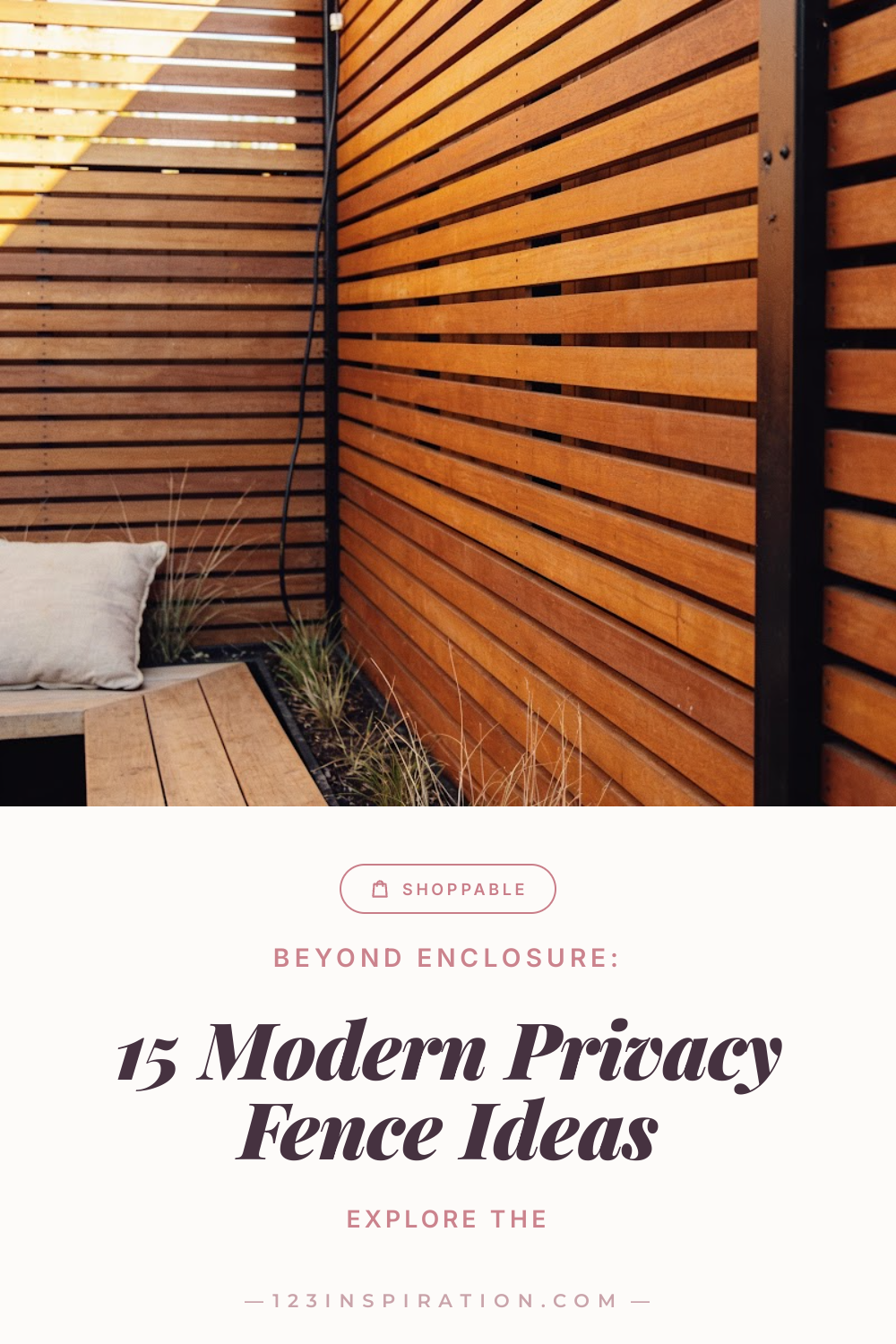
The horizontal slat fence is the most popular departure from the traditional vertical picket, and for good reason — it reads immediately as contemporary without being cold. Cedar is the wood of choice because it’s naturally rot-resistant and takes on a warm silver-grey patina over time if left unsealed, or holds a rich honey tone if oiled annually.
The key design detail that separates a good horizontal slat fence from a generic one is the frame. Matte black steel posts and top rails turn the cedar panels into something that looks intentional — almost architectural. Spacing the slats with consistent 1-to-2-inch gaps gives you privacy from a standing position while still letting air and light filter through at ground level, which prevents the fence from making the yard feel like a box.
If your yard is small, run the slats in a single continuous direction without interruption — no posts visible from the yard side. It reads longer and makes the space feel larger.
Key Takeaway: Pair cedar slats with matte black steel framing to elevate horizontal slat fencing from basic carpentry to a deliberate design choice.
2. Corrugated Metal + Wood Frame
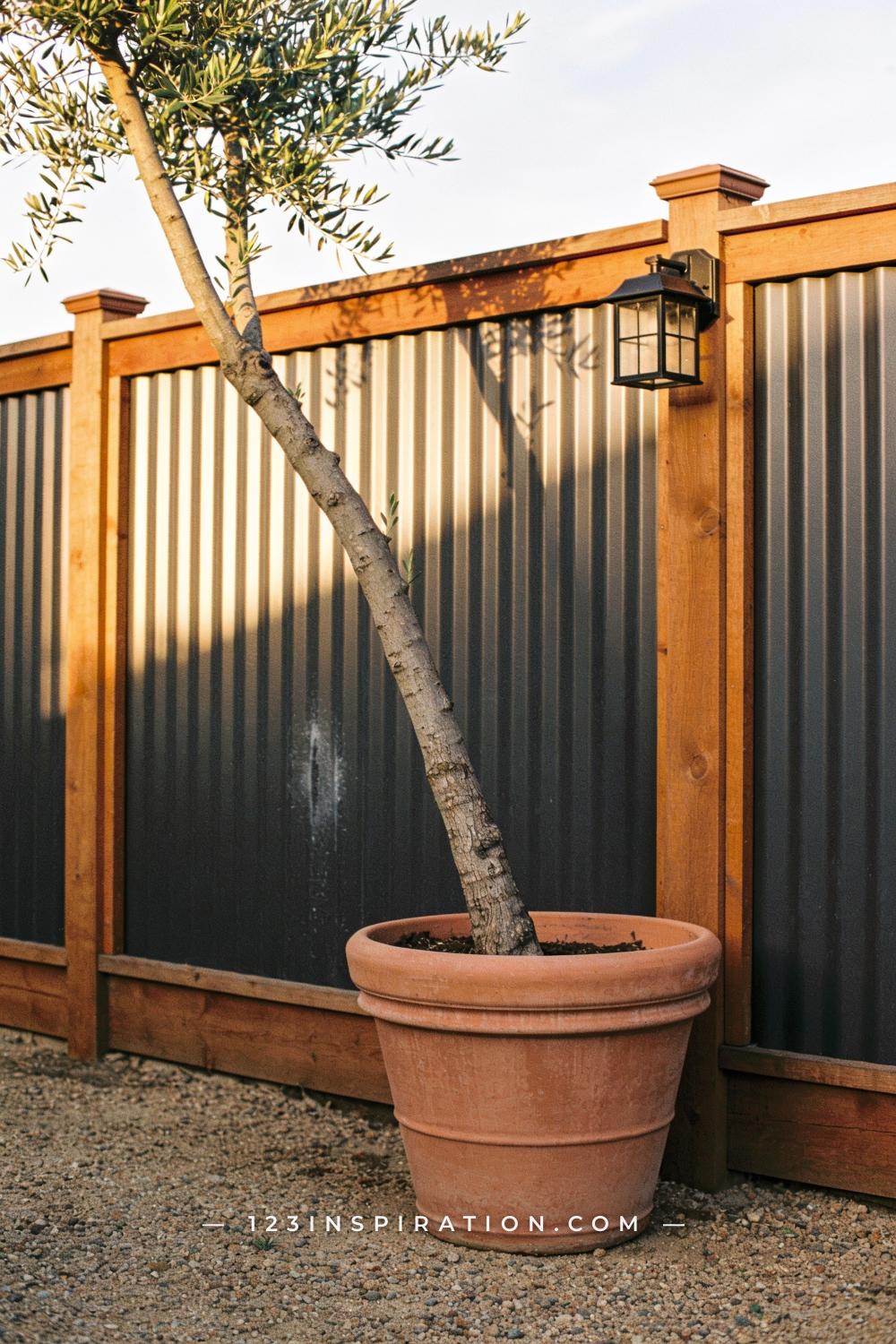
Corrugated metal is having a genuine moment in residential fence design, and it’s not because it’s cheap — it’s because the texture is visually interesting in a way that flat panels never are. The rippled surface catches light differently throughout the day, shifting from warm silver in the morning to near-bronze at dusk.
The mistake most people make is leaving the corrugated metal fully exposed on the top edge, which can look unfinished. Cap it with a cedar or steel top rail and the whole panel looks intentional. Galvanized corrugated metal softens over time to a warm silver; for a more permanent finish, powder-coated panels in matte charcoal or bronze hold their color and resist rust significantly longer.
This combo works especially well in yards with a desert, Mediterranean, or modern farmhouse aesthetic — the raw material quality pairs well with olive trees, ornamental grasses, and decomposed granite surfaces.
Key Takeaway: Top-cap your corrugated panels with a wood or steel rail to finish the raw edge and make the whole fence look designed rather than improvised.
3. Vertical Pipe Rail With Climbing Plants
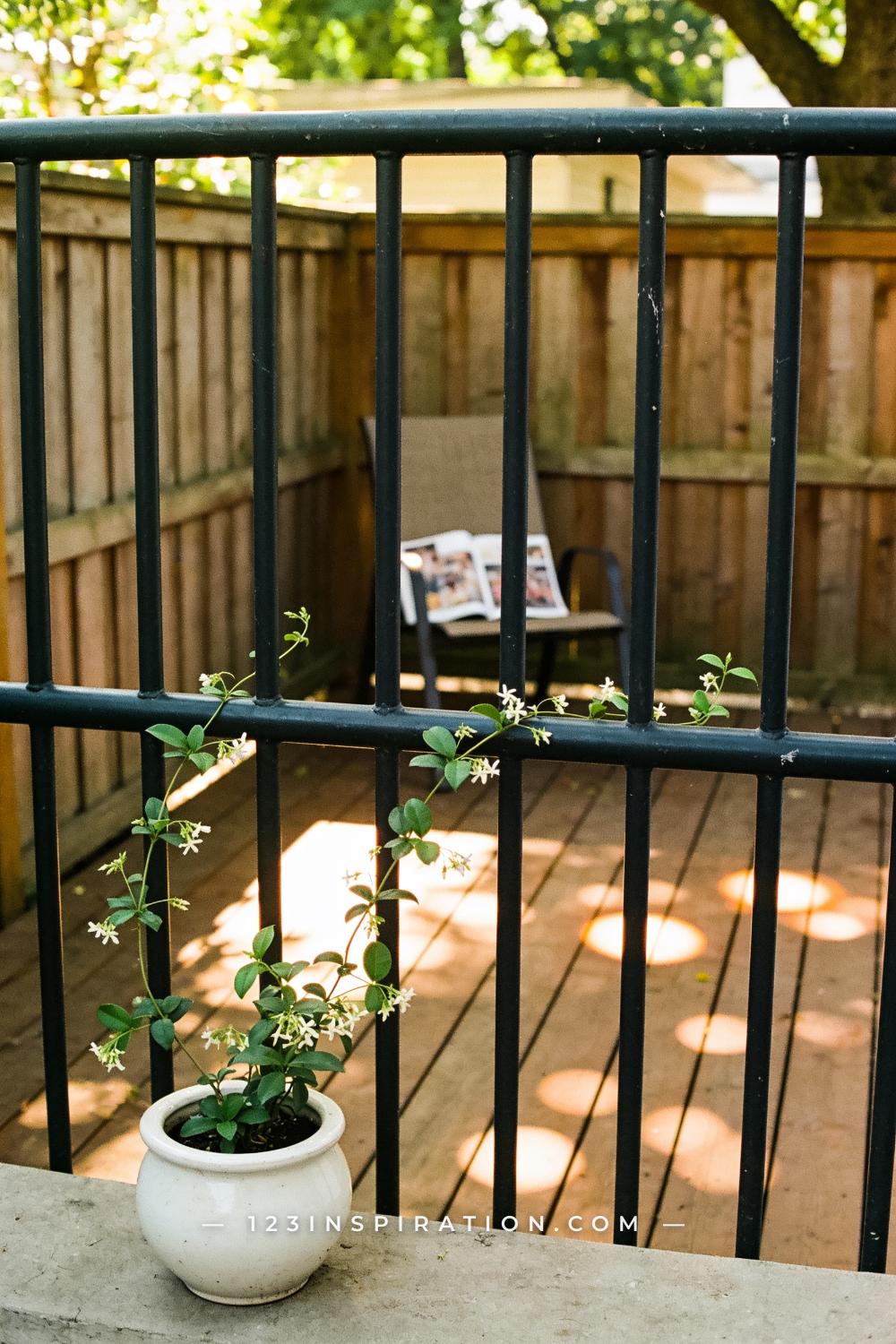
A pipe rail fence is technically a semi-privacy option, but pair it with a fast-growing climbing plant — jasmine, climbing roses, or star jasmine — and you’ll have full visual screening within one to two growing seasons, plus a fence that looks like it belongs in a boutique hotel garden.
The design advantage here is that the fence is interesting in every season: graphic and architectural when the plants are sparse in early spring, lush and fragrant when they’re full in summer. Unlike a solid wood panel, this approach doesn’t make a small yard feel enclosed — the eye can still travel through the structure, which keeps the space feeling open even when it’s private.
Use steel pipe rather than aluminum rail here. The weight and matte finish read as more substantial, and climbing plant tendrils grip steel better. Space the verticals at 4-inch intervals for structural integrity and to prevent animals from squeezing through.
Key Takeaway: Vertical pipe rails with climbing plants give you a fence that earns its privacy gradually and becomes the most visually interesting thing in the yard by mid-summer.
4. Board-on-Board Privacy Fence in Matte Black
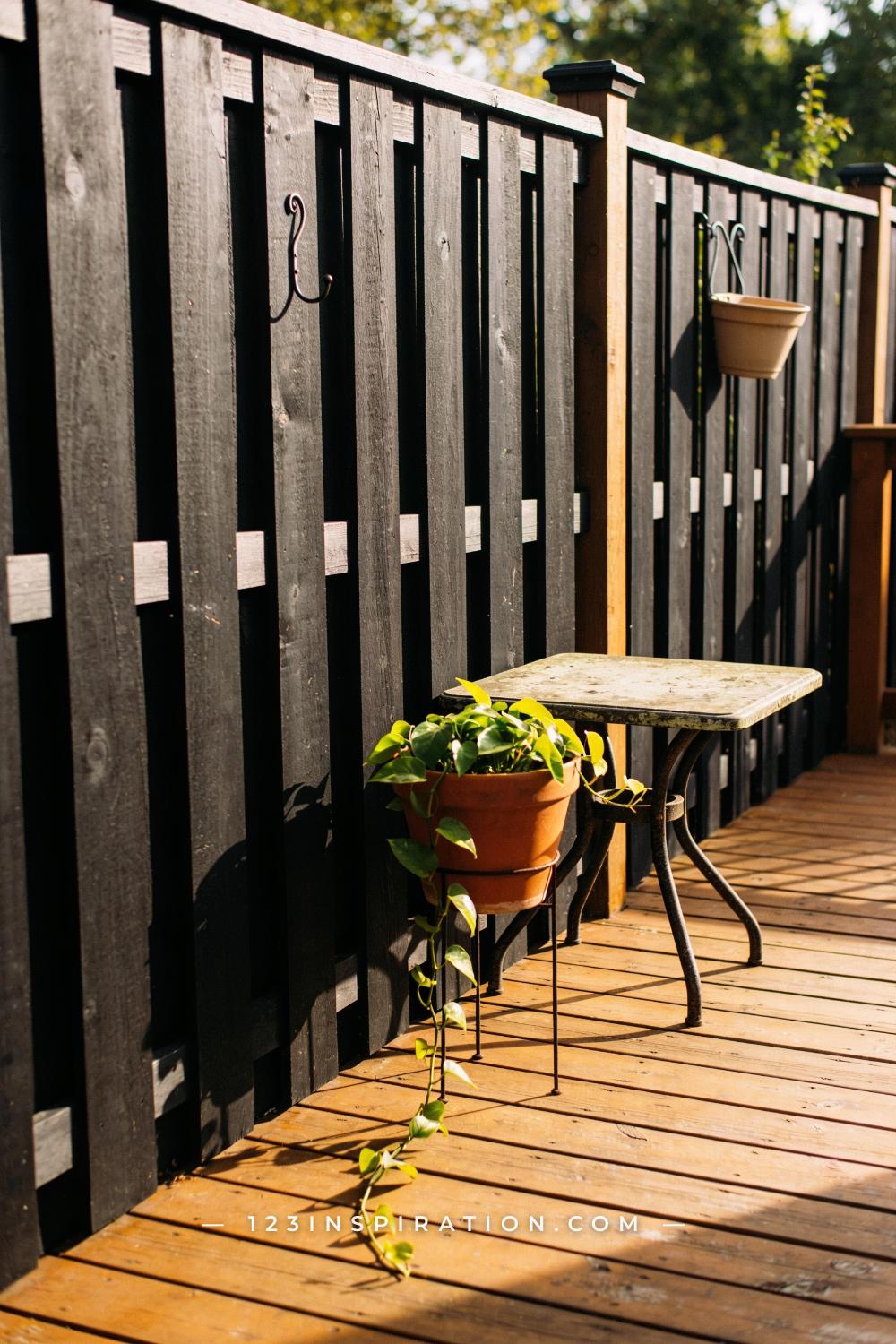
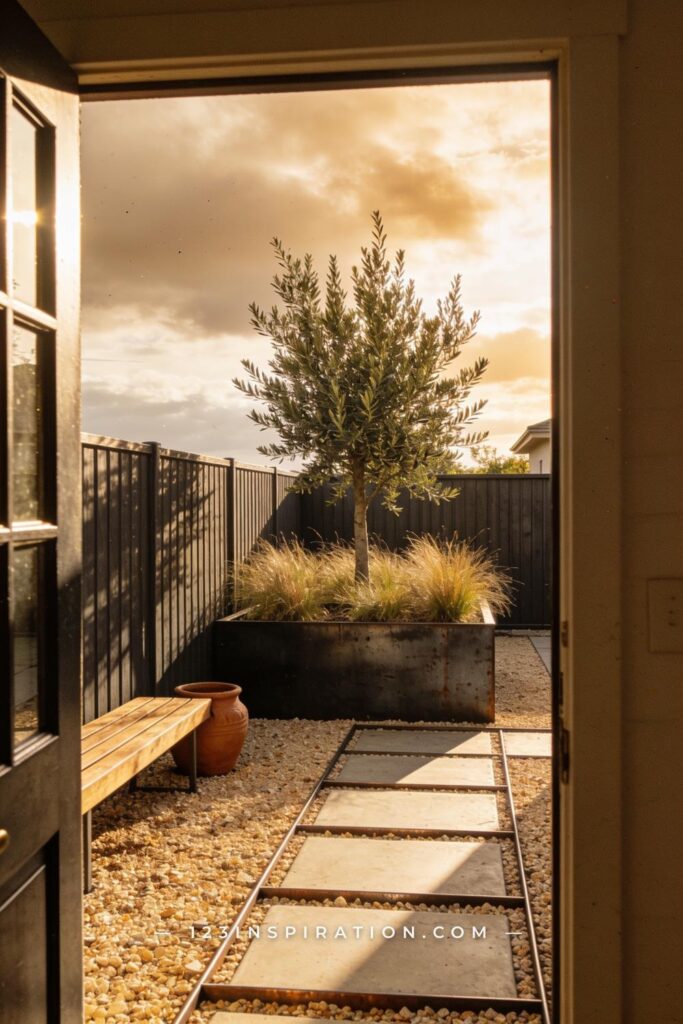
The board-on-board fence — where boards alternate overlapping from each side of the rail — is a traditional privacy solution, but paint it in a deep matte black or dark charcoal and it becomes something else entirely. Dark-painted fences have been a mainstay of modern British and Scandinavian garden design for years, and they’re finally arriving in North American suburban yards.
The reason the dark color works so well: it visually recedes. A black fence makes your garden beds and planters pop forward, makes your outdoor furniture read as the focal point, and makes the yard feel larger by removing the fence from the visual competition. A beige or natural wood fence competes with everything else for attention; a black fence disappears and lets the rest of the yard do the work.
Use exterior-grade alkyd paint rated for wood fencing and re-coat every three to four years. The board-on-board overlap means zero gaps, which is the best privacy rating of any wood design.
Key Takeaway: A dark matte finish on board-on-board fencing turns a standard privacy structure into a deliberate design backdrop that makes everything in front of it look better.
5. Frosted Glass Panel Fence
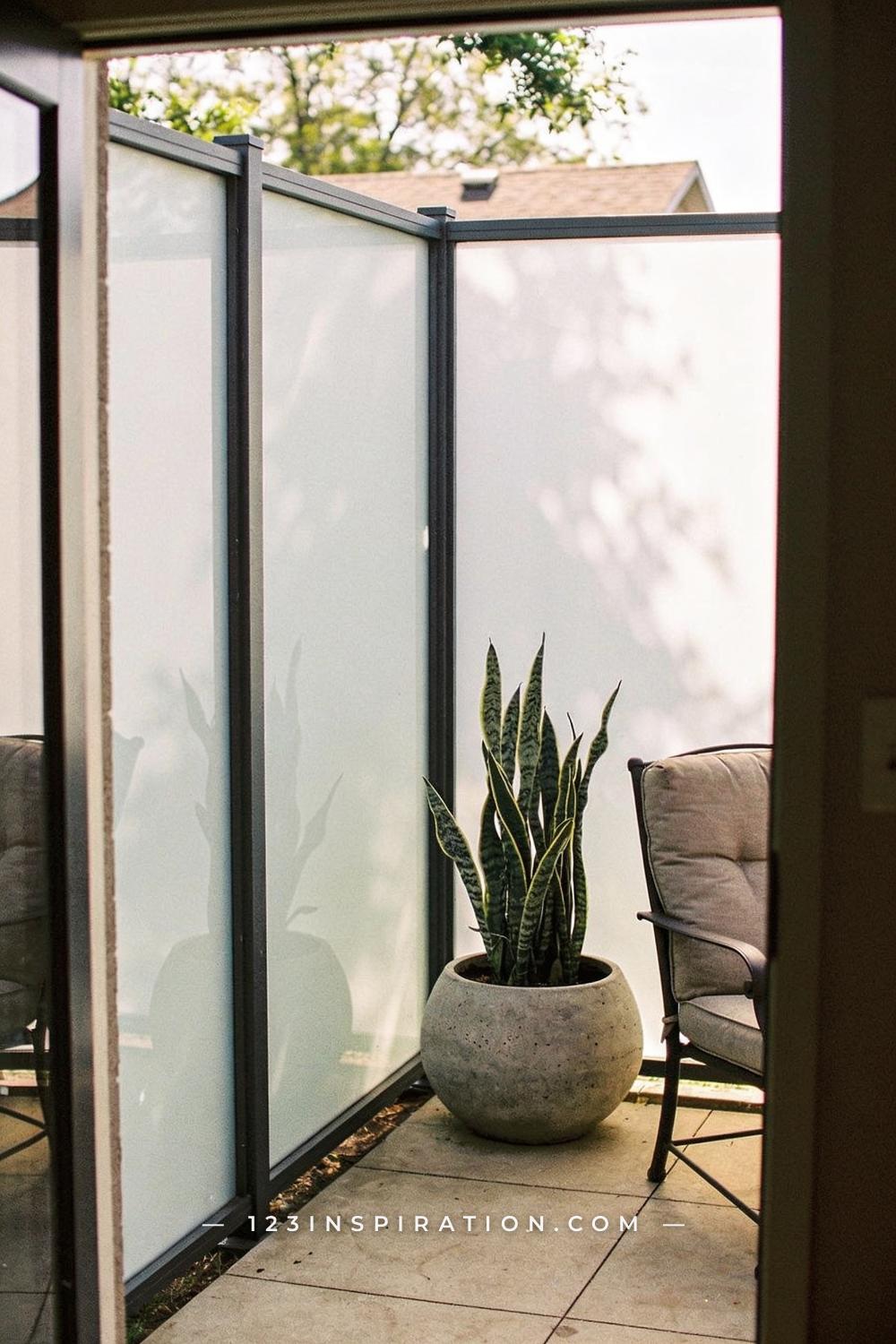
Frosted glass privacy fencing reads as the most sophisticated option on this list — and it’s the one most homeowners assume is out of reach financially. For a full backyard perimeter, it can be. But for a targeted application — screening a hot tub, separating a dining patio from the yard, or creating privacy on one side where a neighbor’s window directly overlooks — it’s both practical and genuinely striking.
The visual effect of frosted glass is unlike any other material: it diffuses light rather than blocking it, which means the patio behind it feels bright and open even while being completely screened. You also get the soft, shifting silhouette of movement and foliage on the other side — a living visual effect that changes with the day and season.
Pair frosted glass panels with powder-coated aluminum frames (not wood) for a truly maintenance-free installation. The combination of frosted white glass and matte charcoal frame is the current standard in modern landscape architecture and holds up across contemporary, transitional, and minimalist yard styles.
Key Takeaway: Use frosted glass panels strategically for targeted privacy zones rather than full perimeter — it’s the highest-design option on the list and works best as a feature, not a wall.
6. Planter-Integrated Fence Panels
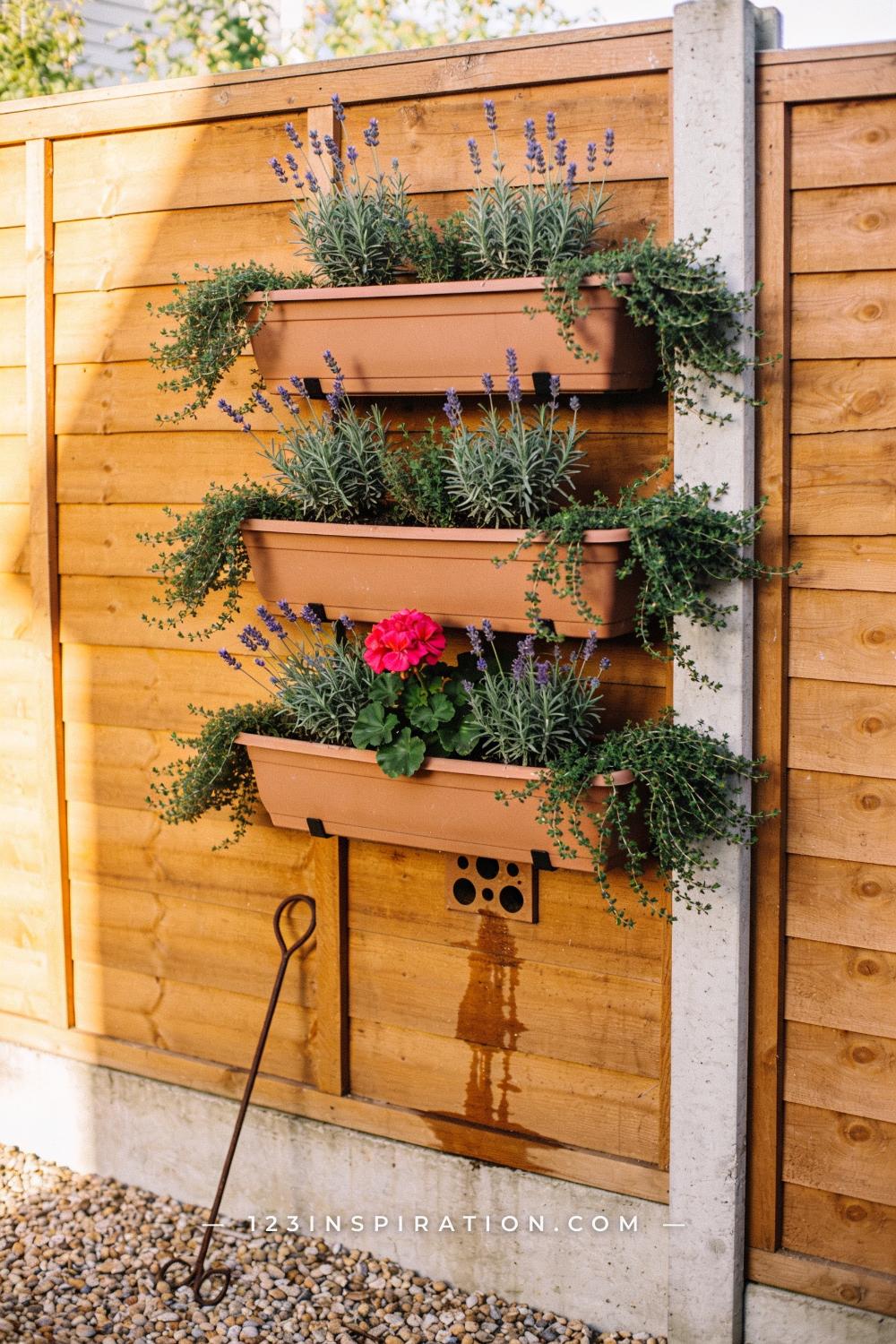
The planter-integrated fence is the idea that keeps going viral on Pinterest because it solves two problems at once — privacy and planting space — in a yard that may not have room for separate garden beds. Essentially, planter boxes are attached directly to fence panels at varying heights, turning the fence face into a vertical garden.
For this to look designed rather than DIY-cobbled, proportions matter more than anything else. Planters should be a minimum of 10 inches deep (enough for real root structure), and they should be planted generously — trailing plants that spill over the front edge create the cascading effect that makes the fence feel lush rather than just functional.
Cedar is still the best fence material for this application because it weathers to match the planter boxes over time. If you’re attaching planters to an existing fence, use stainless steel brackets rated for outdoor use and check the weight capacity of the fence posts — a fully planted box plus wet soil is heavier than it looks.
Key Takeaway: Space planter boxes at three different heights on the fence face and use trailing plants to create a cascading effect that makes the fence read as a garden feature, not a divider.
7. Bamboo Screen Fence
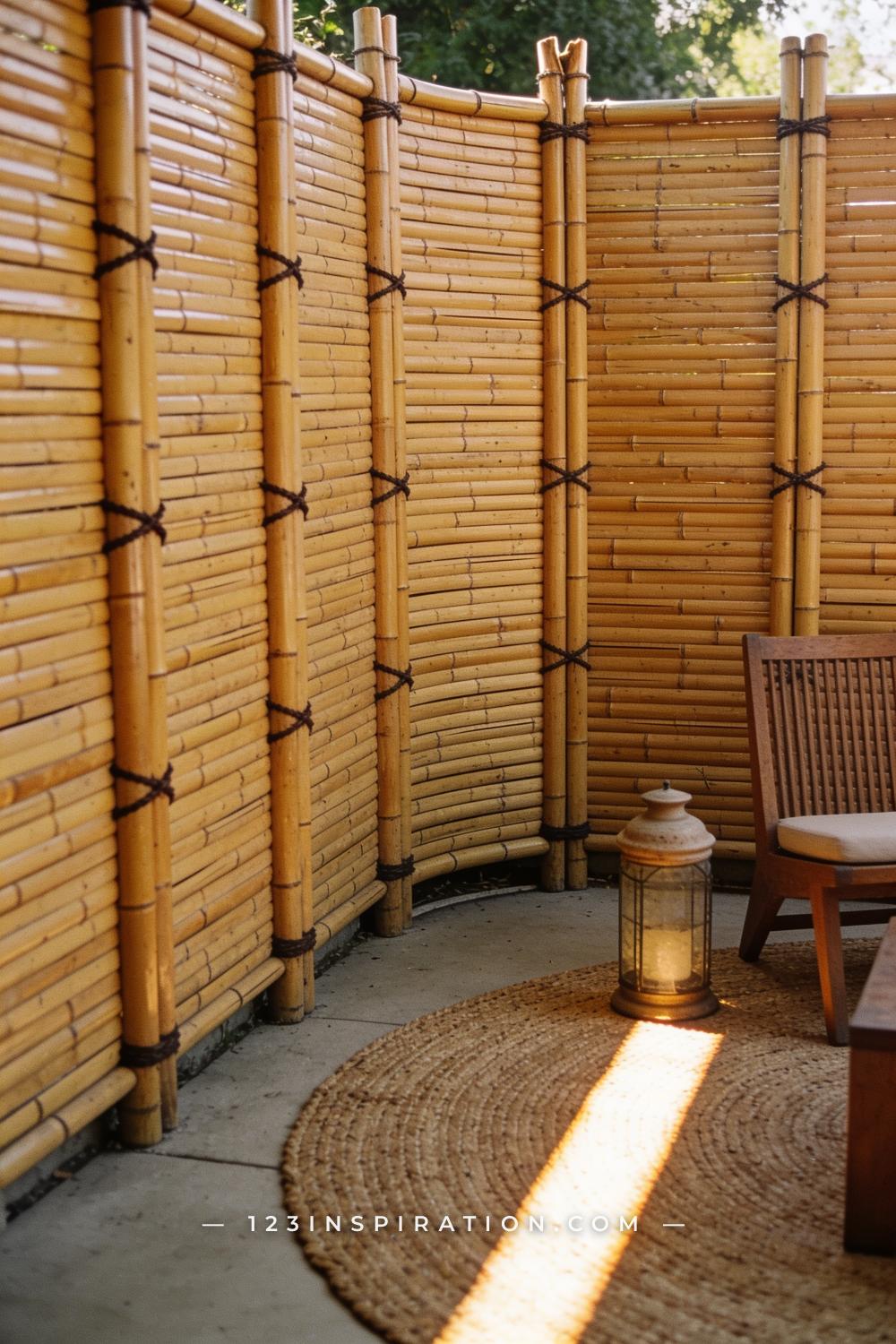
For renters, homeowners in neighborhoods with strict appearance codes, or anyone who wants a temporary privacy solution that doesn’t require post-digging, a bamboo screen fence is one of the most underrated options available. Quality bamboo screen rolls can be attached to an existing chain-link fence, zip-tied to metal posts, or stretched between wood stakes — and the result looks genuinely warm and organic, not like a temporary band-aid.
The key is buying natural bamboo rather than synthetic bamboo screen (easy to distinguish — natural bamboo has variation in color and pole diameter; synthetic looks uniform and slightly plastic). Natural bamboo weathers to a warm silver-grey over two to three seasons, which actually looks better than the original golden tan.
For design coherence, pair bamboo screening with materials in the same warm-natural family: teak furniture, terracotta planters, woven outdoor rugs. Avoid pairing it with gray concrete pavers or industrial metal — the contrast reads as mismatched rather than eclectic.
Key Takeaway: Buy natural bamboo screen in rolls that are at least 8 feet tall — you can always trim down, but undersized bamboo screening looks provisional rather than designed.
8. Steel Louver Fence
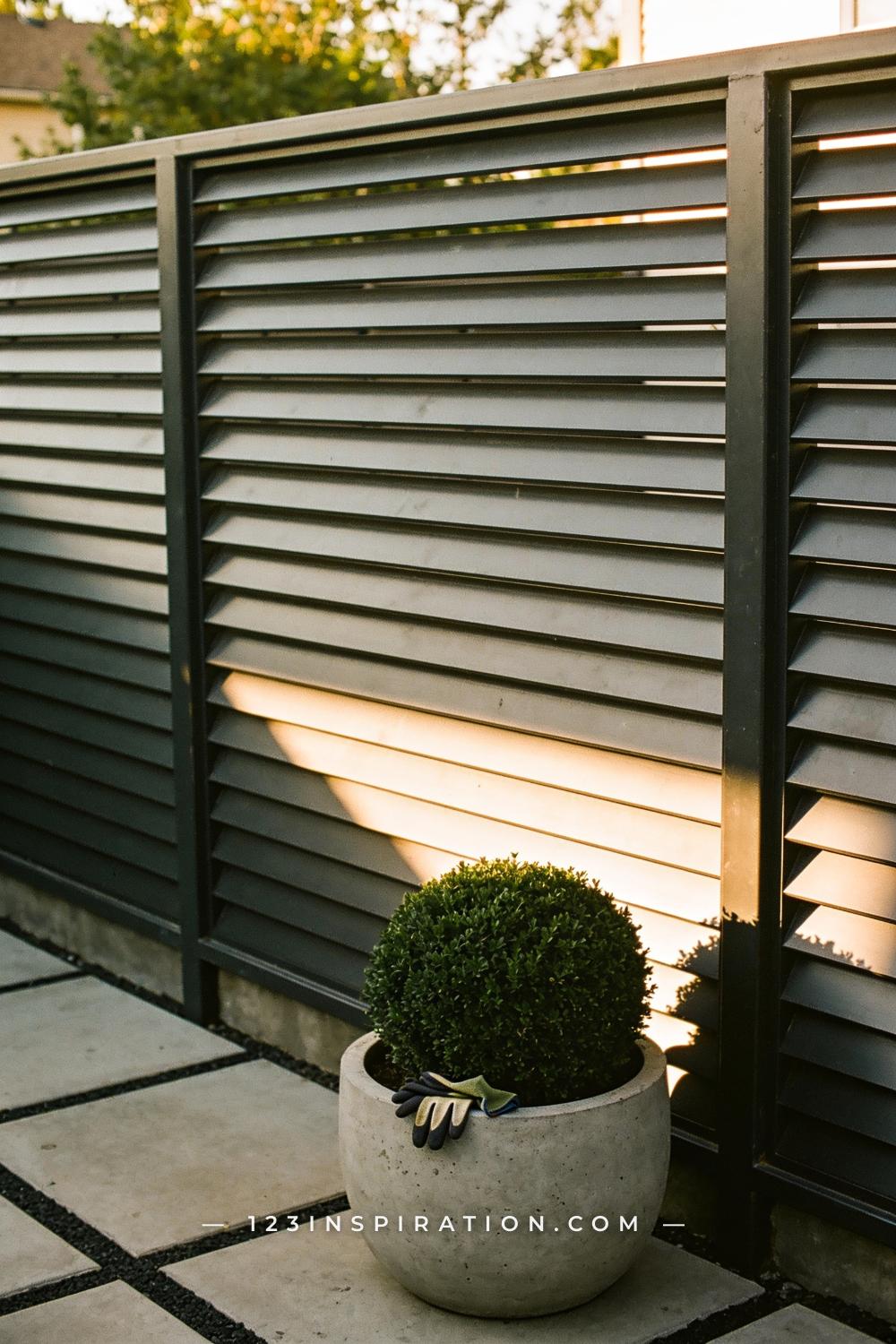
Steel louver fencing is the option architects reach for when a client wants full privacy without any sense of enclosure. The angled slats are engineered to block sightlines from the sides and above while still allowing light and airflow to pass through freely — a meaningful distinction if your backyard gets warm afternoon sun and you don’t want to trap heat.
Weekly Inspiration
1000 ideas, one home at a time
The design language is unambiguously contemporary. Steel louvers work best in yards with a modern, industrial, or desert-modern aesthetic — they pair particularly well with concrete pavers, large-format tile, and architectural plantings like agave, boxwood globes, or ornamental grasses. Avoid pairing them with cottage-style gardens or traditional landscaping; the material contrast fights the planting style.
Powder-coat finish is non-negotiable here — bare steel will rust within one season in most climates. Matte charcoal and warm bronze are the two finishes that work across the widest range of yard styles.
Key Takeaway: Steel louver fences deliver full privacy and full airflow simultaneously — use them in contemporary yards where a solid panel would feel oppressive.
9. Living Fence With Hedge Panels

A living fence — tight-clipped hedging grown in a linear wall — is the most labor-intensive option here, but it’s also the only one that genuinely improves with age. Boxwood, arborvitae, and privet are the standard choices for North American climates; hornbeam is the European option that’s increasingly available through specialty nurseries and grows faster than its reputation suggests.
The design advantage over any hard-material fence is that a living hedge has depth and texture that changes with light, season, and rainfall. It also muffles sound significantly better than a wood or metal fence — an underappreciated benefit for yards near busy streets.
The shortcut that’s gained traction in recent years: pre-grown hedge panels in steel frames. You install the framed panel like a hard fence — posts and brackets — and the hedge arrives at the height you want, fully established. It costs more upfront but eliminates the three to five year establishment wait of planting from scratch.
Key Takeaway: Pre-grown hedge panels in steel frames give you the living-fence look on day one without the multi-year growing period — worth the premium for yards where immediate privacy is the goal.
10. Lattice-Top Privacy Fence
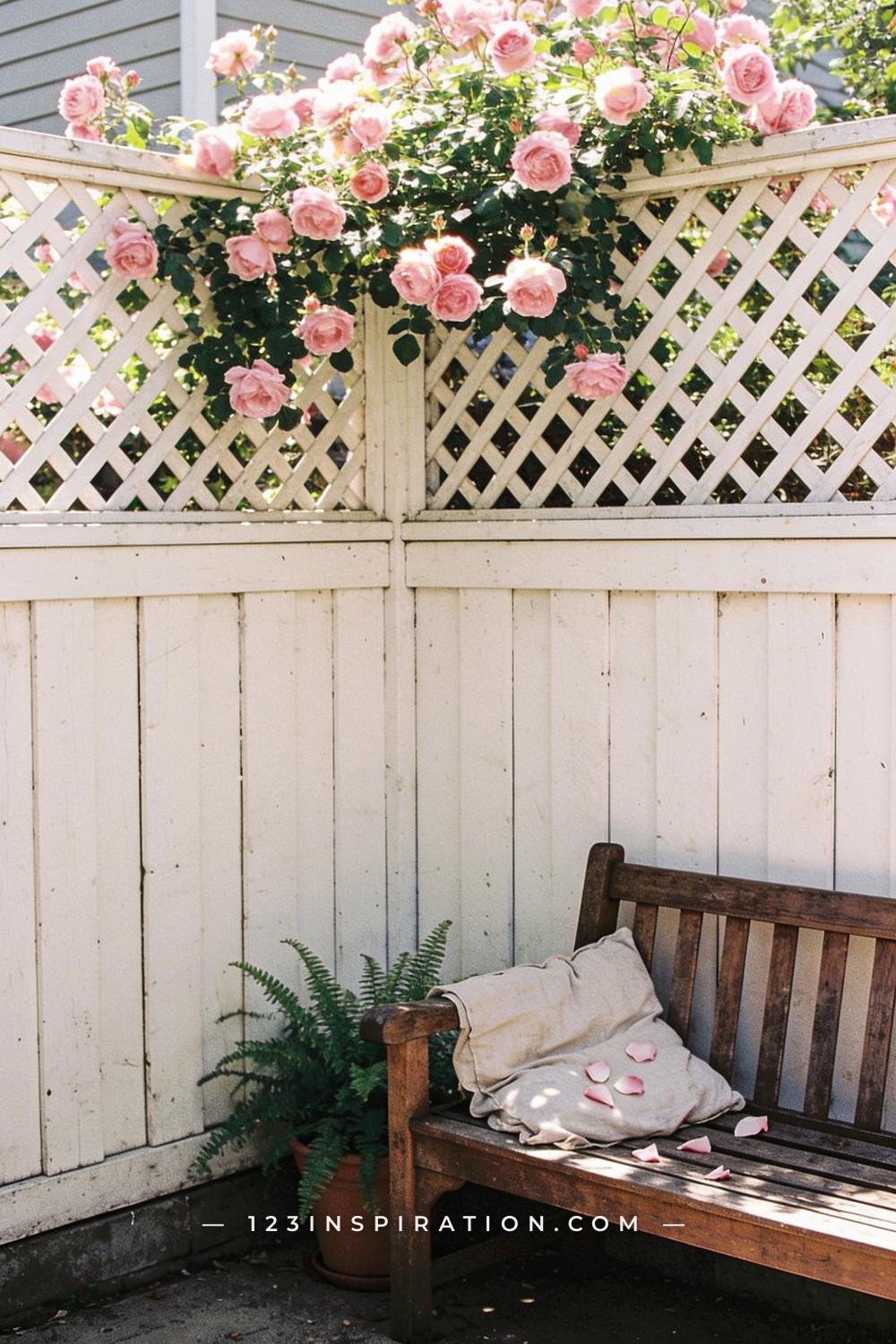
The lattice-top privacy fence is the design solution for yards where you need full privacy at eye level but want something more visually interesting than a flat panel that goes all the way up. The solid lower section — typically four feet — handles the actual privacy function. The lattice section above it gives the fence visual lightness, allows climbing plants to thread through, and keeps the top edge from feeling like a wall.
This format has been around for decades, but the difference between a dated version and a contemporary one is entirely in the detail. Traditional lattice-top fences are usually white vinyl or natural pine — both read as standard. Paint the whole fence in a deep tone — black, deep sage, or navy — and the lattice suddenly looks architectural rather than decorative.
A climbing rose, star jasmine, or clematis threading through the lattice section turns the fence into a seasonal focal point, which is a level of design interest you simply can’t get from a solid panel.
Key Takeaway: The solid-to-lattice transition is the structural formula — the finish color and the climbing plant choice are what make it look current rather than traditional.
11. Horizontal White Fence With Black Hardware
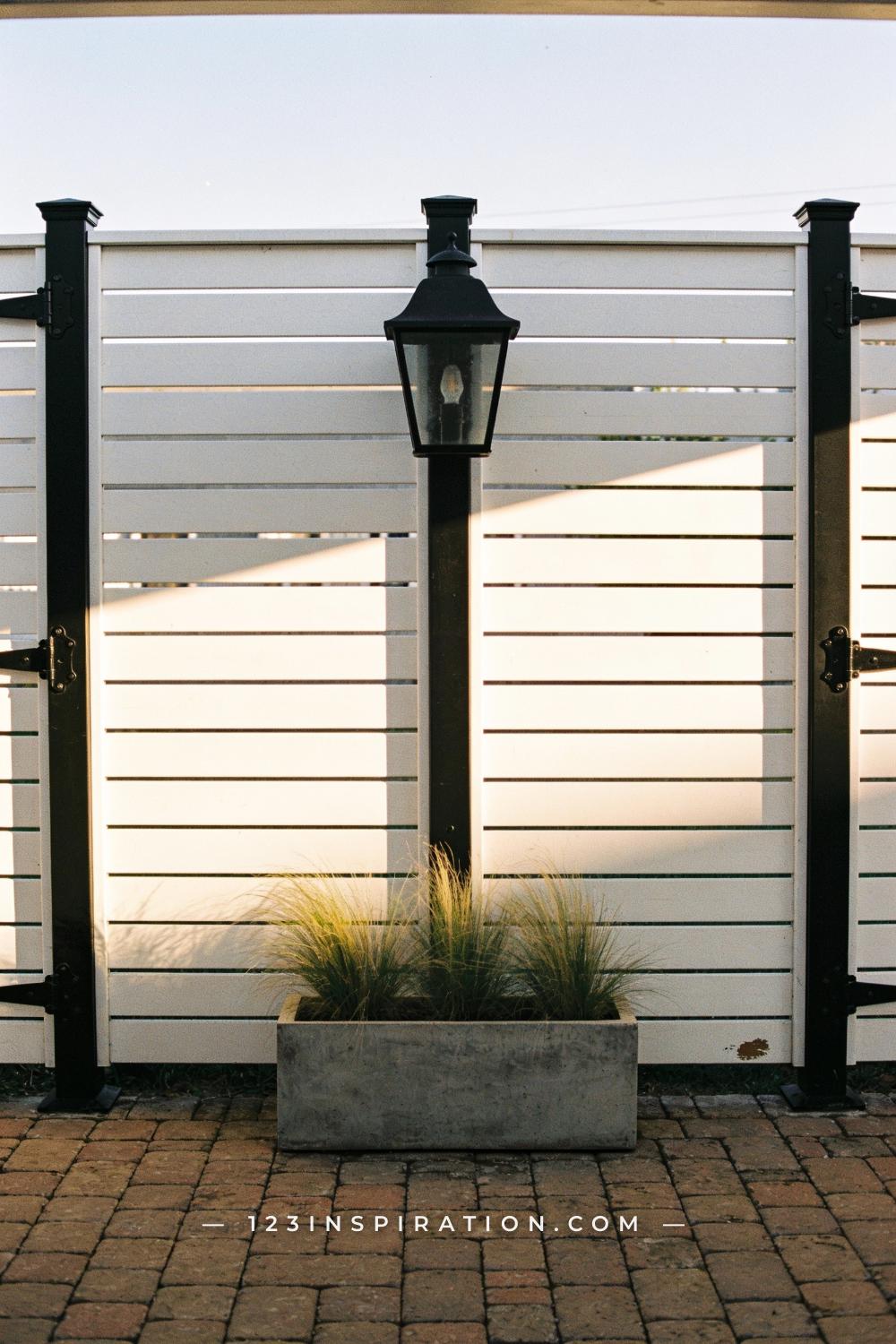
The white horizontal fence with black hardware is the outdoor equivalent of a white kitchen with black cabinet hardware — a combination that works because of the contrast clarity between the two elements. Each reads distinctly, neither competes with the other, and the palette is neutral enough to work behind any outdoor furniture color, any planting scheme, any patio material.
The hardware is the part most people underinvest in. Consistent matte black post caps, carriage bolts, and fence brackets are what make this combination look like a design decision rather than a coincidence. Mixed-metal hardware — some chrome, some black, whatever was on sale — immediately cheapens the whole fence.
Pair this fence style with a wall-mounted matte black outdoor sconce on the center post for evening use. The light fitting anchors the fence visually when it’s dark and makes the fence feel like part of the exterior architecture rather than a yard boundary.
Key Takeaway: Consistent matte black hardware — post caps, bolts, and brackets from the same finish family — is what separates a designed white fence from a painted one.
12. Privacy Fence With Built-In Bench and Planters
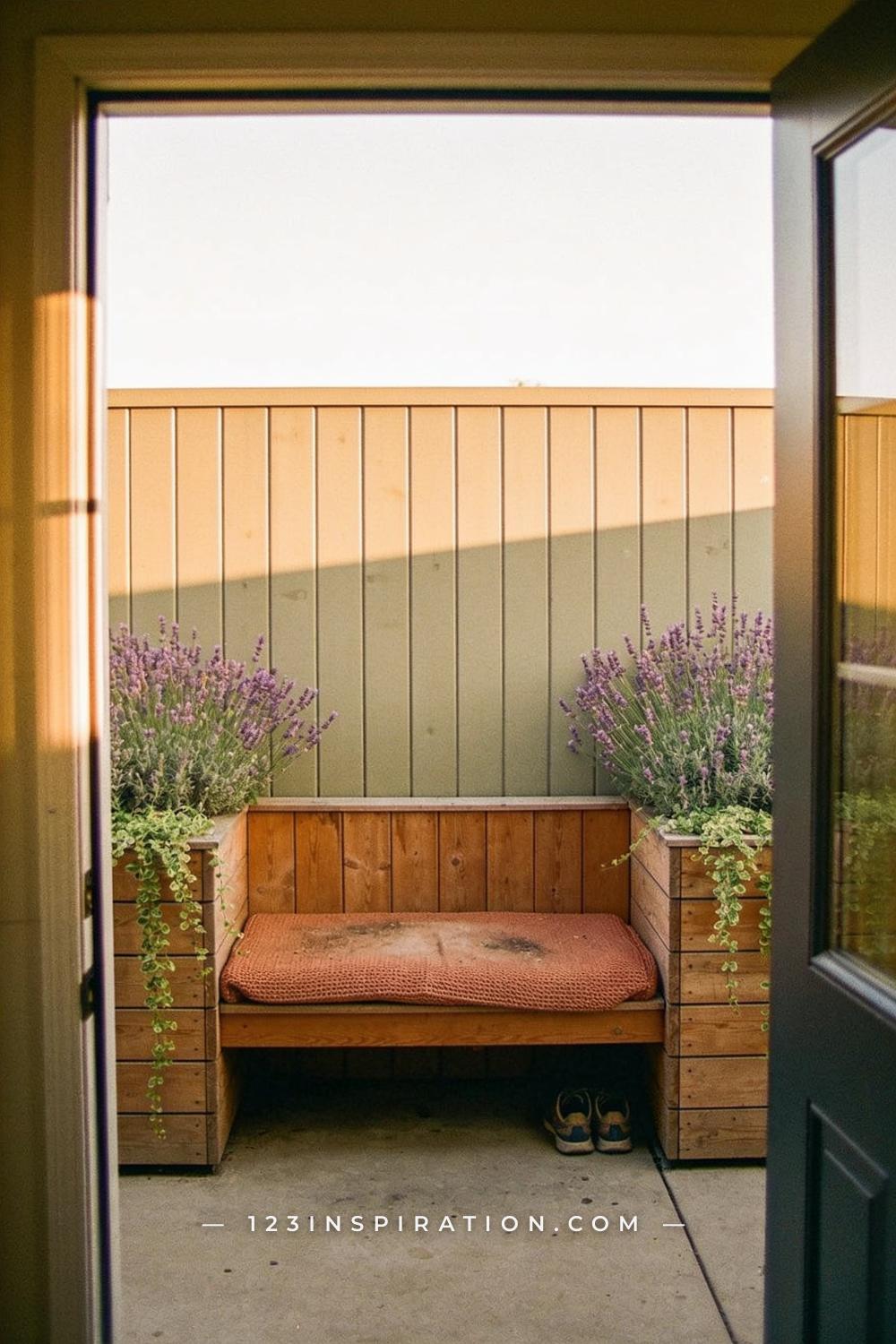
A privacy fence with integrated seating and planters is a backyard design move that experienced landscape designers use constantly in small or medium-sized yards — it compresses the footprint of the seating area and the garden bed and the fence into a single built structure, reclaiming floor space that separate elements would have consumed.
The built-in bench along the fence line creates a natural gathering edge that makes even a small backyard feel like it has a destination. Planters flanking the bench — and potentially attached to the fence face above — add the vertical greenery layer that grounds the whole structure in the garden.
For proportion: the bench seat should be 16–18 inches from the ground (standard seating height), the planters 12 inches deep minimum, and the fence behind the structure at least 6 feet for privacy. The whole unit reads as one architectural element when it’s dimensionally coordinated.
Key Takeaway: Treat the bench, planters, and fence as one built unit with coordinated dimensions — that’s what elevates this from “bench near a fence” to a proper garden feature.
13. Fence With Integrated Lighting
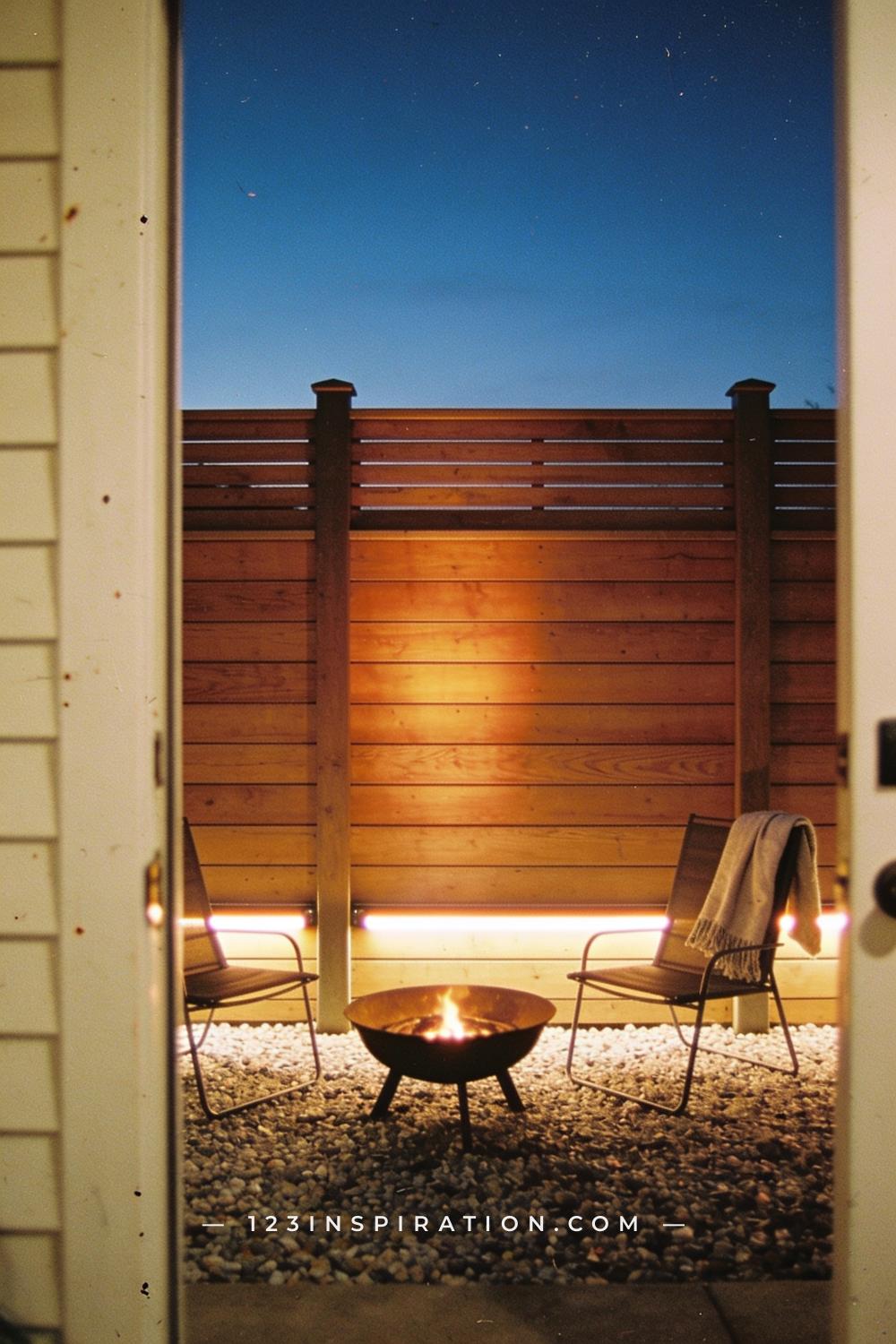
Lighting integrated into a privacy fence does two things at once: it extends the usability of the backyard into evening hours, and it turns the fence from a boundary into a design feature that’s arguably more beautiful at dusk than during the day. The warm glow washing up the cedar or through horizontal slat gaps creates a lantern-like ambient effect that no amount of string lights can replicate.
The cleanest integration approach is surface-mounted hardscape lighting fixtures at regular intervals along the fence base — typically every 6 to 8 feet. These are low-voltage DC fixtures that connect to a simple outdoor transformer, and many are solar-powered with enough panel area to run reliably through 4–5 hours of evening use. For horizontal slat fences, recessed step lights mounted between post and rail create a glowing gap effect that’s particularly photogenic.
Post cap lights — solar lantern-style caps that replace the standard flat post cap — are the easiest retrofit addition for an existing fence and look more substantial than their modest price suggests.
Key Takeaway: Low-voltage ground-level lighting along the fence base is the single highest-impact evening upgrade you can make to any existing fence style.
14. Slatted Wood Fence With a View Window
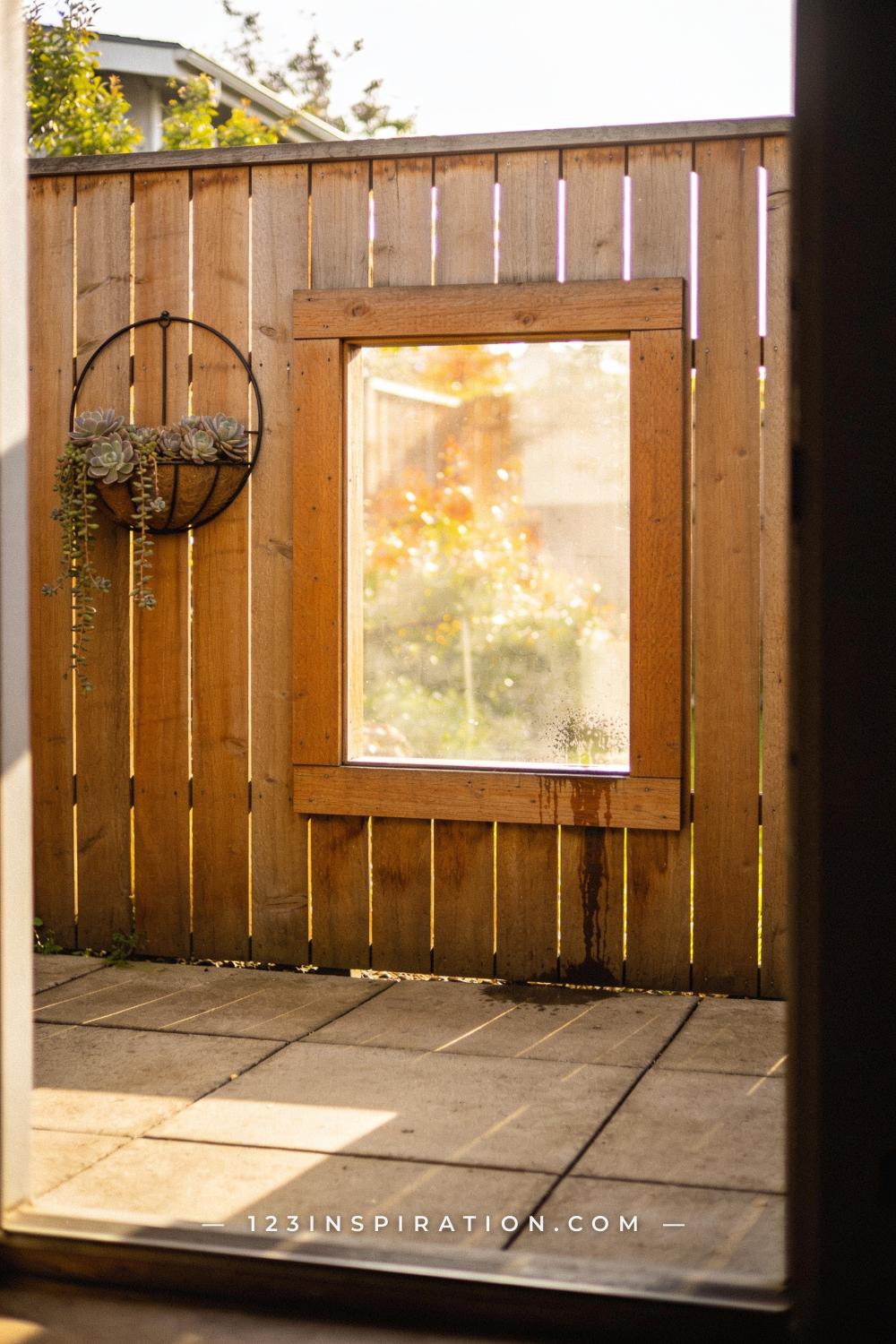
A deliberate view window cut into an otherwise solid privacy fence is the kind of design detail that makes a yard feel like it was designed by someone who thought carefully about it — because almost no one else does it. The window does two things: it frames a view (a garden beyond, a tree, a neighbor’s borrowed landscape) as an intentional composition, and it relieves the visual weight of a tall solid fence, especially in a small yard.
The framing of the window matters as much as the window itself. A clean cedar or steel frame that matches the fence material and hardware ties the opening to the fence rather than making it look like an accident. Proportion matters: a window that’s too small reads as a peephole; one that’s too large looks structurally uncertain. A 16 x 24 inch opening is the sweet spot for most residential fences — wide enough to frame a view, bounded enough to feel intentional.
This is also a straightforward retrofit for an existing solid fence — a jigsaw and a trim kit is the basic toolkit required.
Key Takeaway: Frame the view window with trim that matches your fence’s hardware finish — that single detail is the difference between a deliberate design feature and a hole in the fence.
15. Mixed-Material Fence: Stone Post + Wood Panel

Mixed-material fencing — stone or masonry posts with wood or metal panels between them — is the approach that gives a fence the permanence and visual weight of a structural garden wall while keeping the cost manageable. The stone pillars do the heavy lifting visually: they read as architectural, grounding, permanent. The panels between them can be wood, corrugated metal, or horizontal slats, and they read as the lighter infill that the stone pillars anchor.
This combination suits yards with a traditional, Mediterranean, or transitional aesthetic better than any other fence style on this list — it connects to the language of European walled gardens and formal landscape architecture without requiring a full masonry wall budget.
The proportional key: pillars should be roughly one-third the fence span width, panels two-thirds. A pillar that’s too slim looks like it was added as decoration rather than structure. Cap the stone pillars with a flat bluestone or limestone cap for a refined finish that keeps water from infiltrating the mortar.
Key Takeaway: Stone or masonry pillars are the structural anchors that give a mixed-material fence its permanence — don’t undersize them relative to the infill panels.
The fence you choose will shape the entire atmosphere of your backyard — it’s the backdrop behind every outdoor moment you have in that space. The best approach is to match the fence material and design to the broader style language of your yard and your home’s exterior, and then treat it as a design element in its own right rather than a boundary condition. Start with the one style on this list that feels closest to your aesthetic, then look at the surrounding details — lighting, planters, ground surface — and design outward from there. A fence that fits the yard doesn’t just keep people from looking in; it makes the whole space feel like it was put together with intention.