123Inspiration
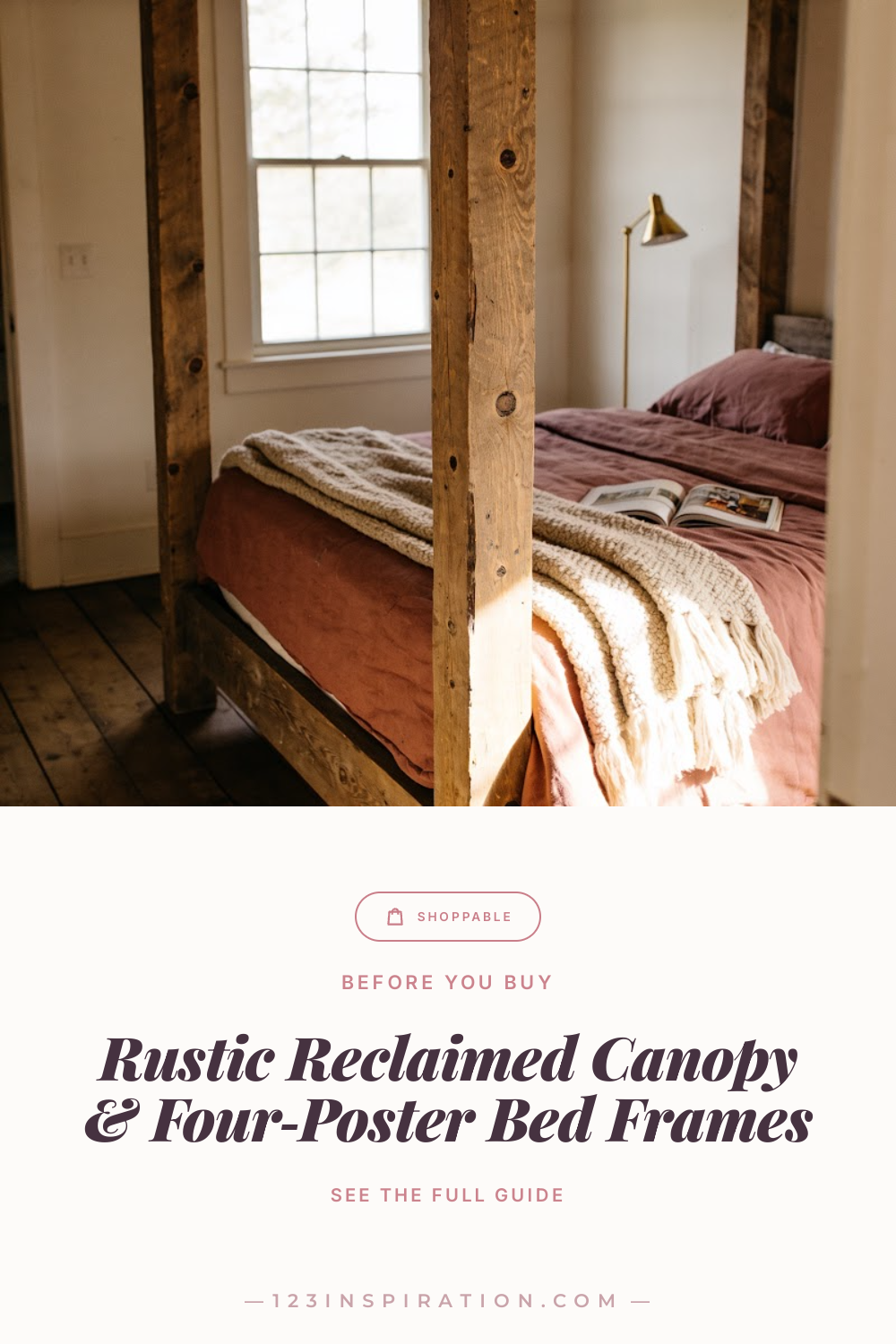
A statement bed frame is the single piece of furniture that changes how an entire bedroom reads — not a gallery wall, not a rug, not a light fixture. Get the frame right and the rest of the room falls into place around it. Get it wrong and even beautiful bedding can’t save the space.
Rustic reclaimed canopy and four-poster frames are having a genuine resurgence in 2026, and for good reason. They bring the kind of visual weight, material warmth, and architectural presence that no upholstered panel bed or metal pipe frame can replicate. But they’re also easy to get wrong — the wrong proportions in a low-ceiling room, the wrong canopy draping, or a “reclaimed” frame that’s actually smooth pine with factory distressing can all undermine the investment.
This guide covers 15 specific frame styles worth considering, along with the styling rules that make each one work in a real bedroom rather than a magazine set.
1. The Classic Reclaimed Pine Four-Poster
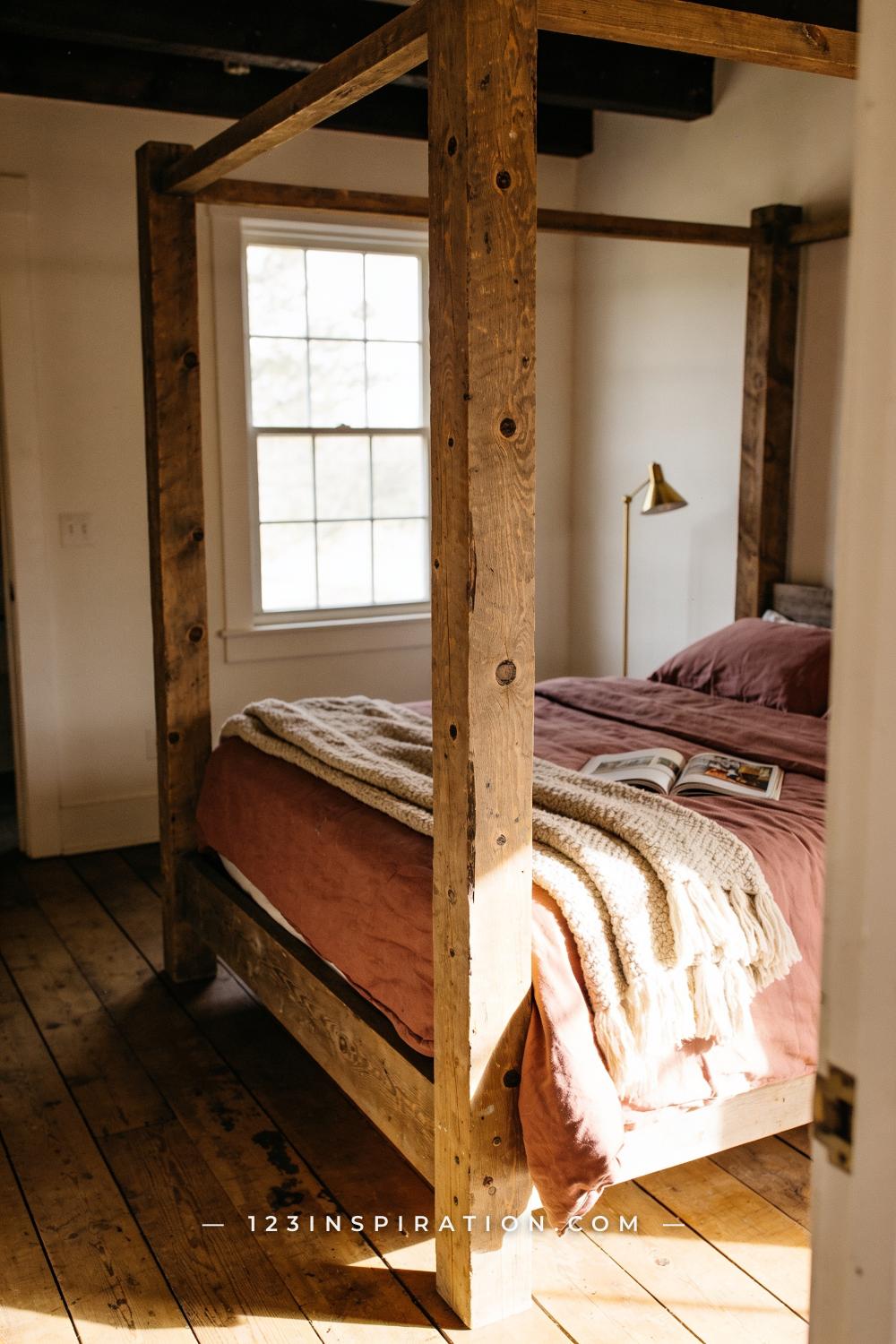
Reclaimed pine is the most accessible entry point into the four-poster category — it’s lighter in weight than oak or walnut, which matters both for shipping and for rooms where you want a rustic look without the visual heaviness. The key marker of genuine reclaimed pine versus factory-distressed pine is grain variation: real reclaimed wood shows knots at irregular intervals, color variation between boards, and minor surface inconsistencies that don’t repeat in a pattern. If the distressing looks uniform, it was added after milling.
When styling a pine four-poster, lean into the wood’s warm yellow-to-amber undertone. Dusty rose, terracotta, and warm white bedding all read beautifully against it. Cool grays fight the warmth and make the frame look dirty rather than aged. Keep the headboard simple — most reclaimed pine four-posters look best without a fabric panel insert; let the wood do the work.
Key Takeaway: Choose reclaimed pine for a lighter visual weight and pair it with warm-toned bedding to honor the wood’s natural amber undertone.

2. Canopy Frames with Open Rails
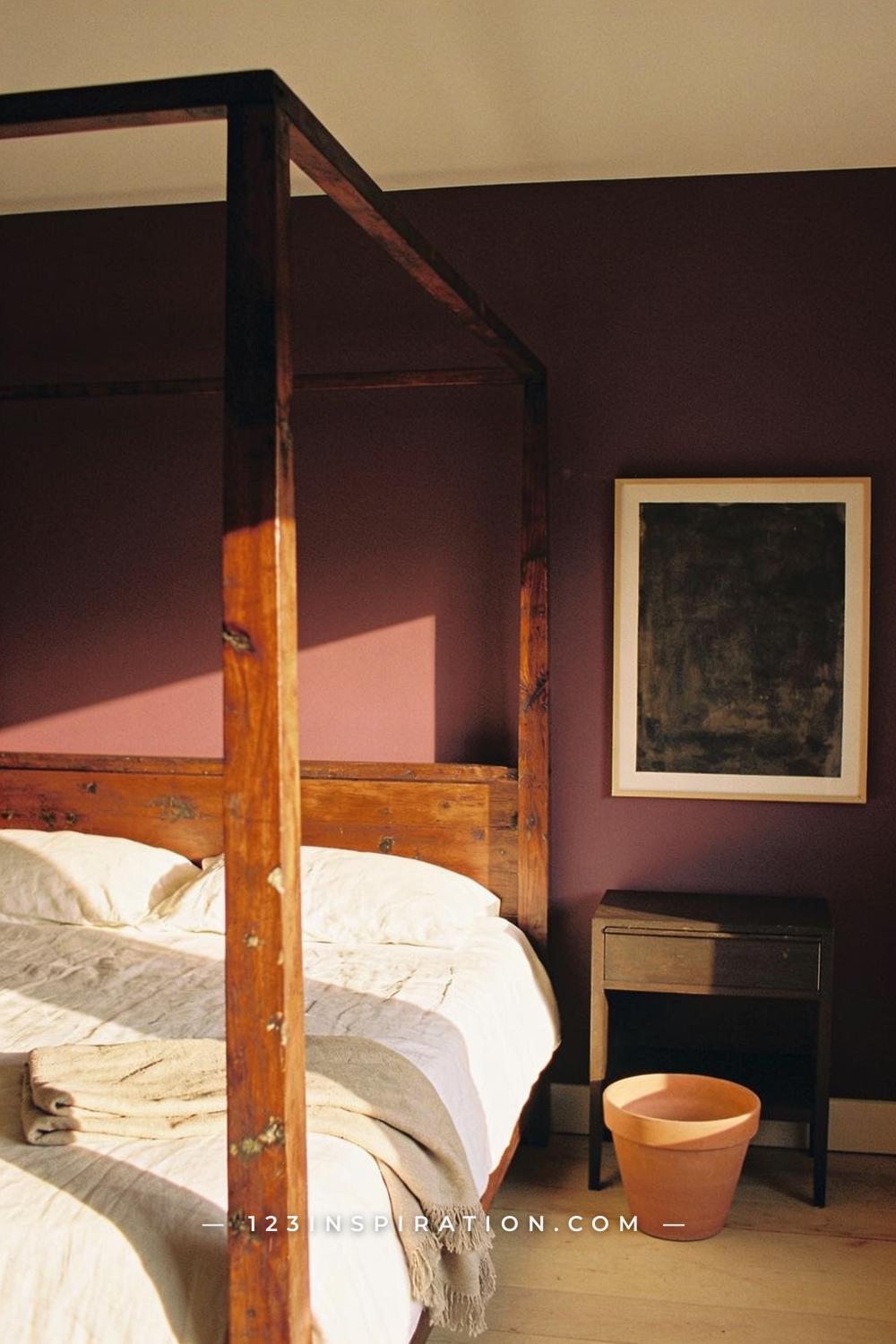
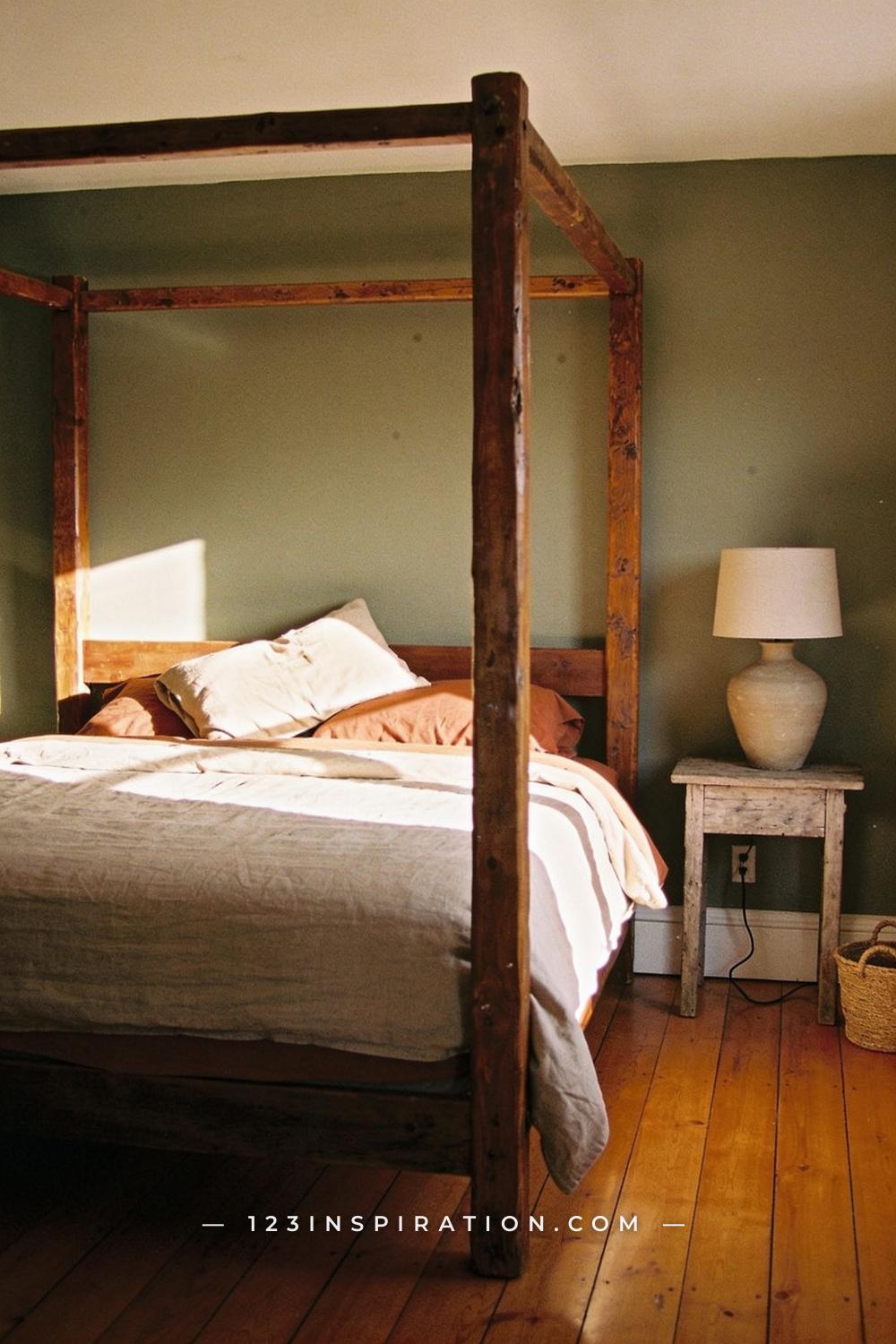
Open-rail canopy frames — four posts connected by horizontal beams at the top with no fabric panels — are the easiest canopy style to live with in a modern home. The architectural silhouette reads as a canopy without the weight, and the open top keeps the room from feeling cavelike, which matters enormously in rooms with ceilings under nine feet. This is the style to choose if you want the visual presence of a canopy frame but your room feels compact.
The temptation with open-rail canopies is to immediately hang something from the rails. Resist it for a week after assembly. Live with the bare frame first — you may find you prefer it. If you do drape fabric, keep it lightweight and airy: unbleached linen panels tied loosely at two corners read as intentional; heavy velvet tied at all four corners reads as a budget version of a Tudor state bed.
Key Takeaway: Open-rail canopy frames work in lower-ceilinged rooms precisely because the visual line stops at the top rail without fabric weight pulling the eye down.

3. Walnut Finish Four-Posters for Darker Rooms
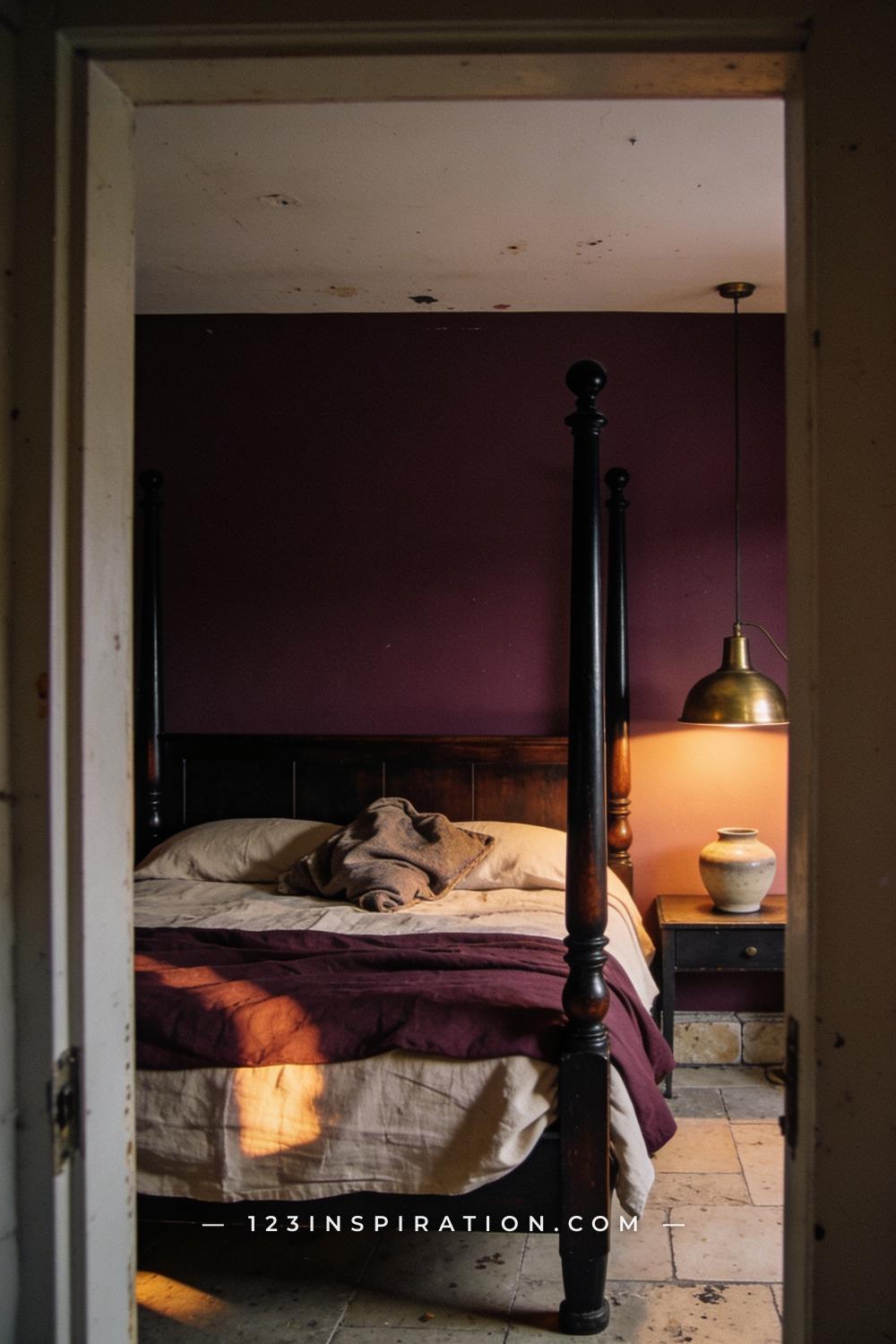
Dark walnut finishes on four-poster frames are the right choice when you’re leaning into a moody, jewel-toned bedroom rather than fighting it. Against deep plum, forest green, or charcoal walls, a walnut four-poster creates depth rather than contrast — the room reads as intentionally layered rather than accidentally dark. The frame and wall work together as the same tonal family, which lets your bedding and lighting do the work of introducing light.
The practical consideration with dark walnut frames is that the finish shows dust more readily on horizontal surfaces, including the top rails of a canopy. A quick wipe with a lightly damp cloth is all that’s needed — avoid oil-based wood treatments on finished frames, which can cloud the surface.
Key Takeaway: A dark walnut four-poster in a jewel-toned room creates tonal depth rather than visual competition — save the contrast for your lighting and textiles.

4. Low-Profile Rustic Frames for Low Ceilings
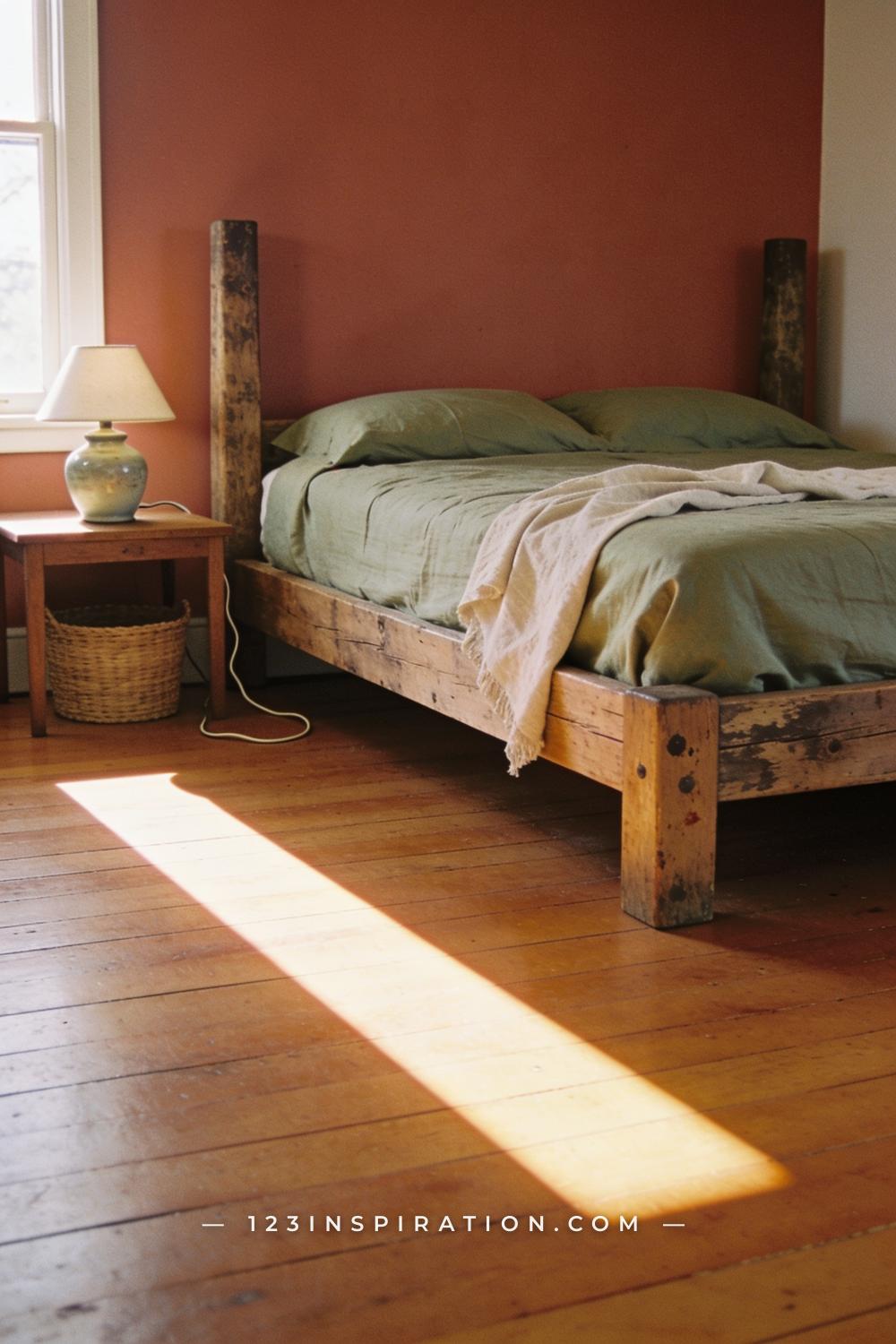
Ceilings under eight and a half feet are incompatible with full-height canopy frames — the posts end up so close to the ceiling that the frame looks crammed in rather than architectural. For these rooms, a low-profile rustic frame is the honest solution: reclaimed wood construction, visible grain and patina, but with posts that stop at headboard height. You get the material warmth of reclaimed wood without the proportional problem.
Pair low-profile rustic frames with an oversized piece of art hung high on the wall above the headboard to draw the eye upward and create the vertical line that a tall post would normally provide. A piece hung 6–8 inches above the headboard accomplishes the same visual lift without requiring a canopy.
Key Takeaway: In a room under 8.5 feet, choose a low-profile reclaimed frame and use wall art above the headboard to create vertical visual interest.

5. Reclaimed Wood Canopy Beds with Fabric Draping
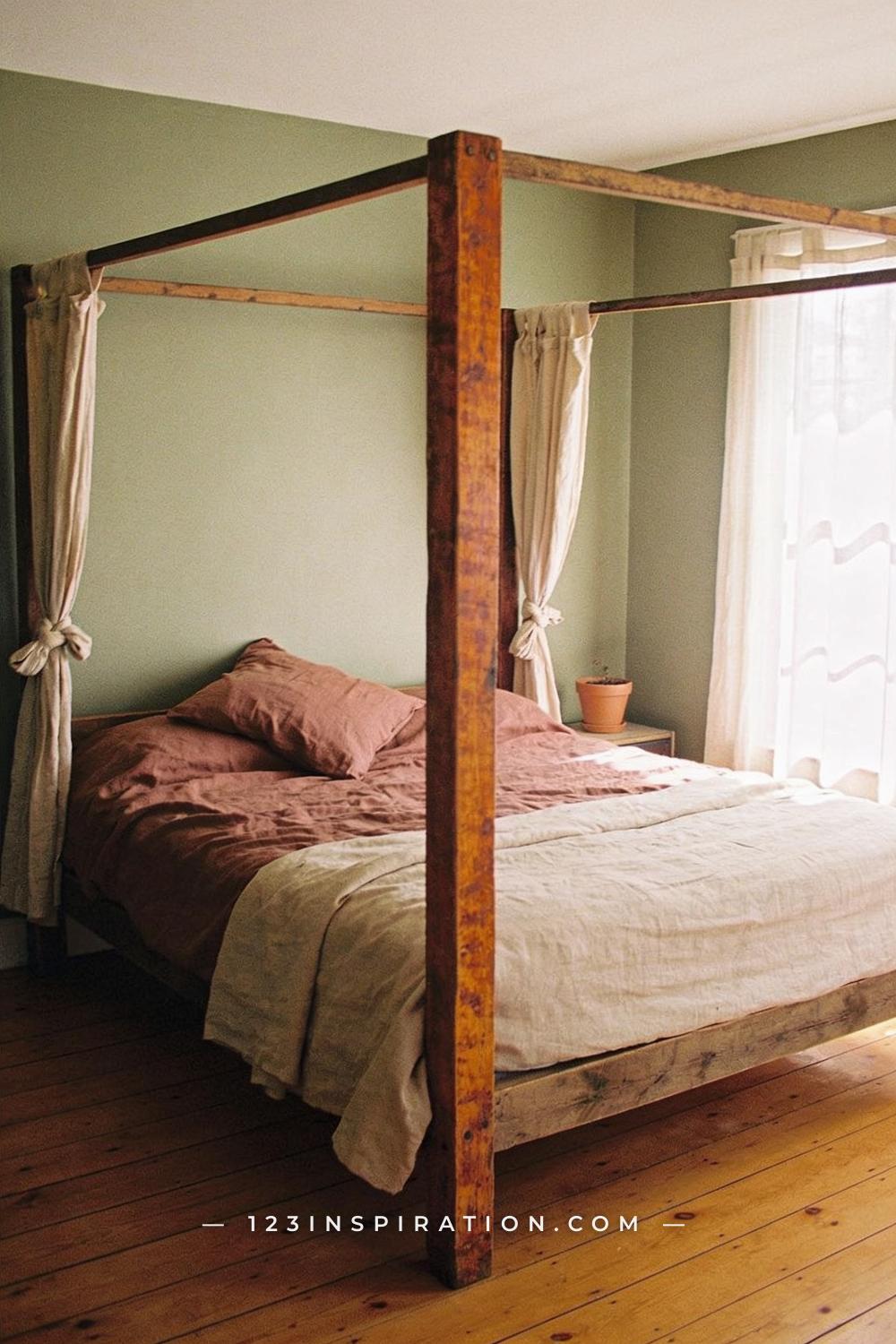
If you’re going to drape fabric from a reclaimed wood canopy, linen is the material that makes the bed look intentional rather than theatrical. Linen drapes with natural weight, wrinkles beautifully, and shares the aged, organic quality of reclaimed wood — they come from the same material family, so they coexist without looking like two different decorating projects colliding in one room.
The most common mistake with canopy draping is enclosing all four sides. A fully enclosed canopy in a bedroom that isn’t a large, high-ceilinged suite feels like a tent rather than a sanctuary. The better approach: two loose panels tied at one post each, falling asymmetrically. It reads as effortless, adds softness, and doesn’t overwhelm the room.
Key Takeaway: Drape only two corners with loose linen panels — asymmetric draping reads as intentional while keeping the room feeling open.

6. Barn Wood Headboard Frames
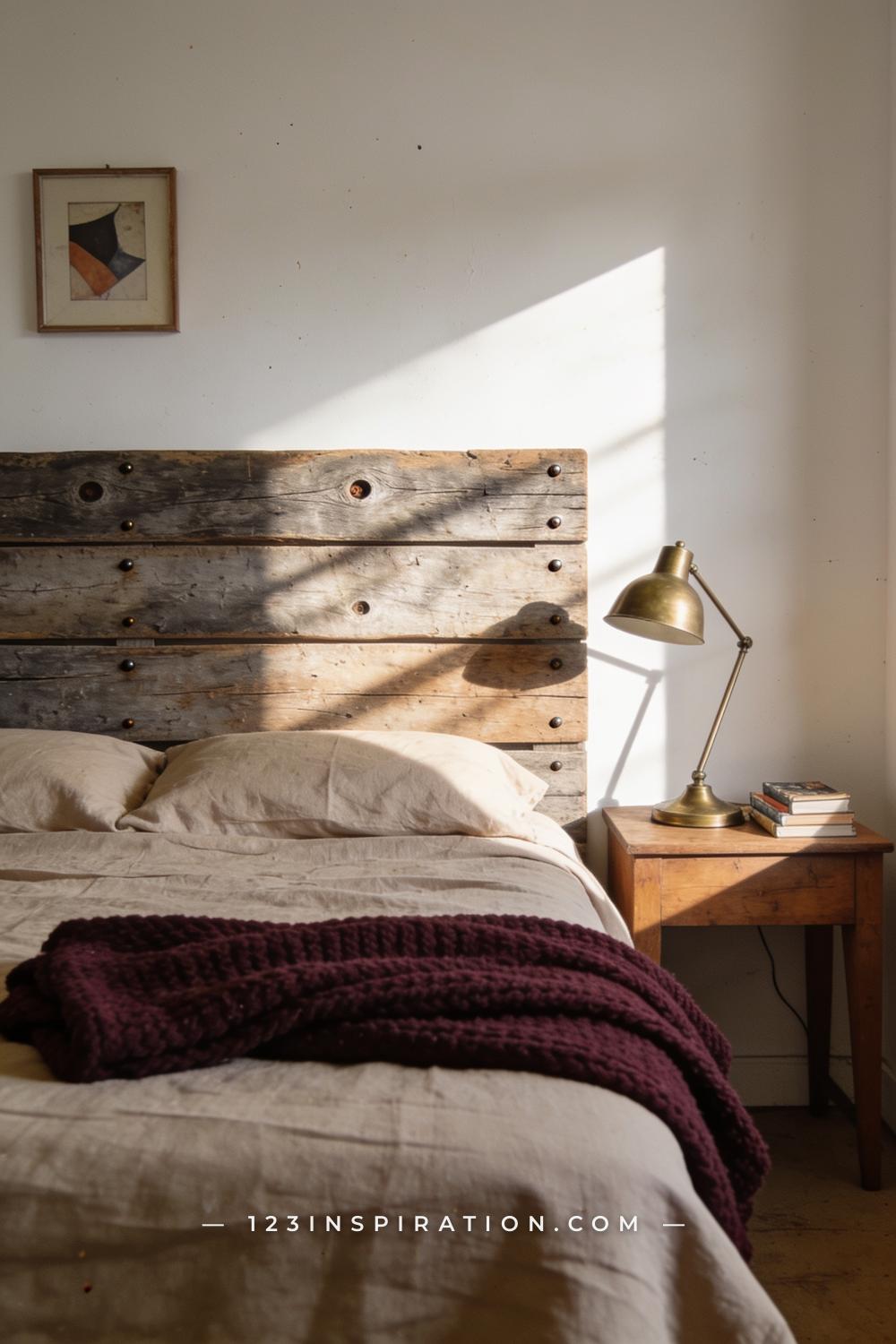
Barn wood headboard frames — where the headboard is constructed from rough horizontal planks, often with visible nail holes, grey weathering, or old paint traces — are the most immediately recognizable form of reclaimed material in bedroom furniture. They carry authentic provenance signals that factory-distressed wood simply cannot fake: the nail holes are in irregular positions, the grey weathering varies across individual boards, and the surface is genuinely uneven.
Pair barn wood headboards with warm white or cream walls rather than painted feature walls. The barn wood itself is already doing the work of introducing rustic texture and material interest — adding a bold wall color behind it creates competition rather than harmony. Let the headboard be the feature.
Key Takeaway: Let barn wood headboards stand against a warm white wall — the plank texture and natural patina are the feature wall, not the backdrop for one.

7. Metal and Reclaimed Wood Hybrid Canopy Frames
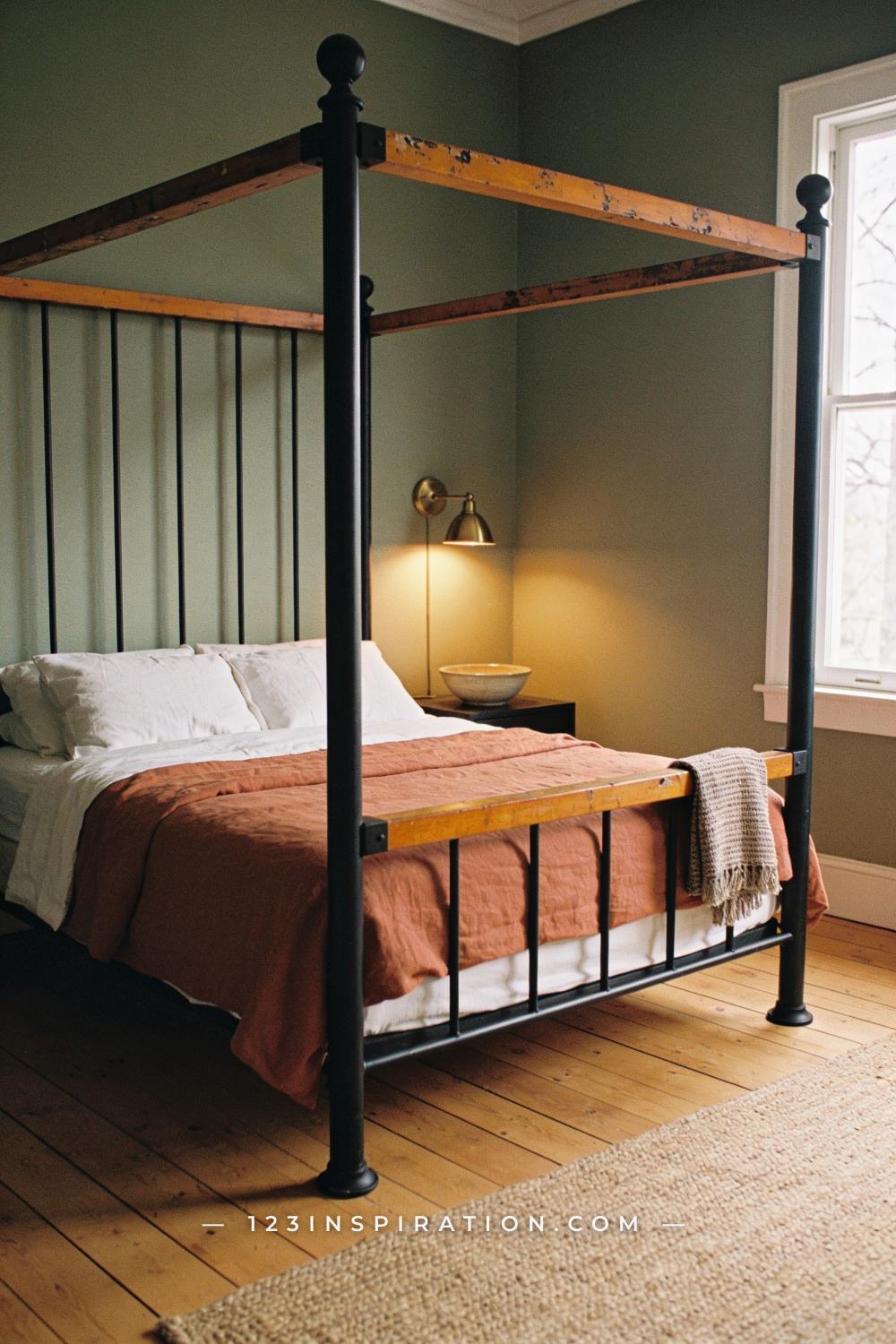
Hybrid frames — matte black iron posts with reclaimed wood rails, or reclaimed wood posts with iron hardware insets — are the most versatile category because they bridge the rustic and industrial aesthetics without fully committing to either. They work in apartments and modern homes where pure barn-wood construction would feel too heavy, while still introducing genuine material warmth that an all-metal frame lacks.
When evaluating hybrid frames, look at the hardware connection points: quality frames use exposed bolt-and-nut joinery that reads as honest and structural; budget frames hide the connections with plastic caps that betray the construction quality immediately. The bolt detail is a reliable quality signal.
Weekly Inspiration
1000 ideas, one home at a time
Key Takeaway: Check the connection hardware on hybrid frames before buying — exposed bolt joinery signals honest construction, while hidden plastic caps usually mean a lower-quality build throughout.

8. Teak Reclaimed Four-Poster Frames
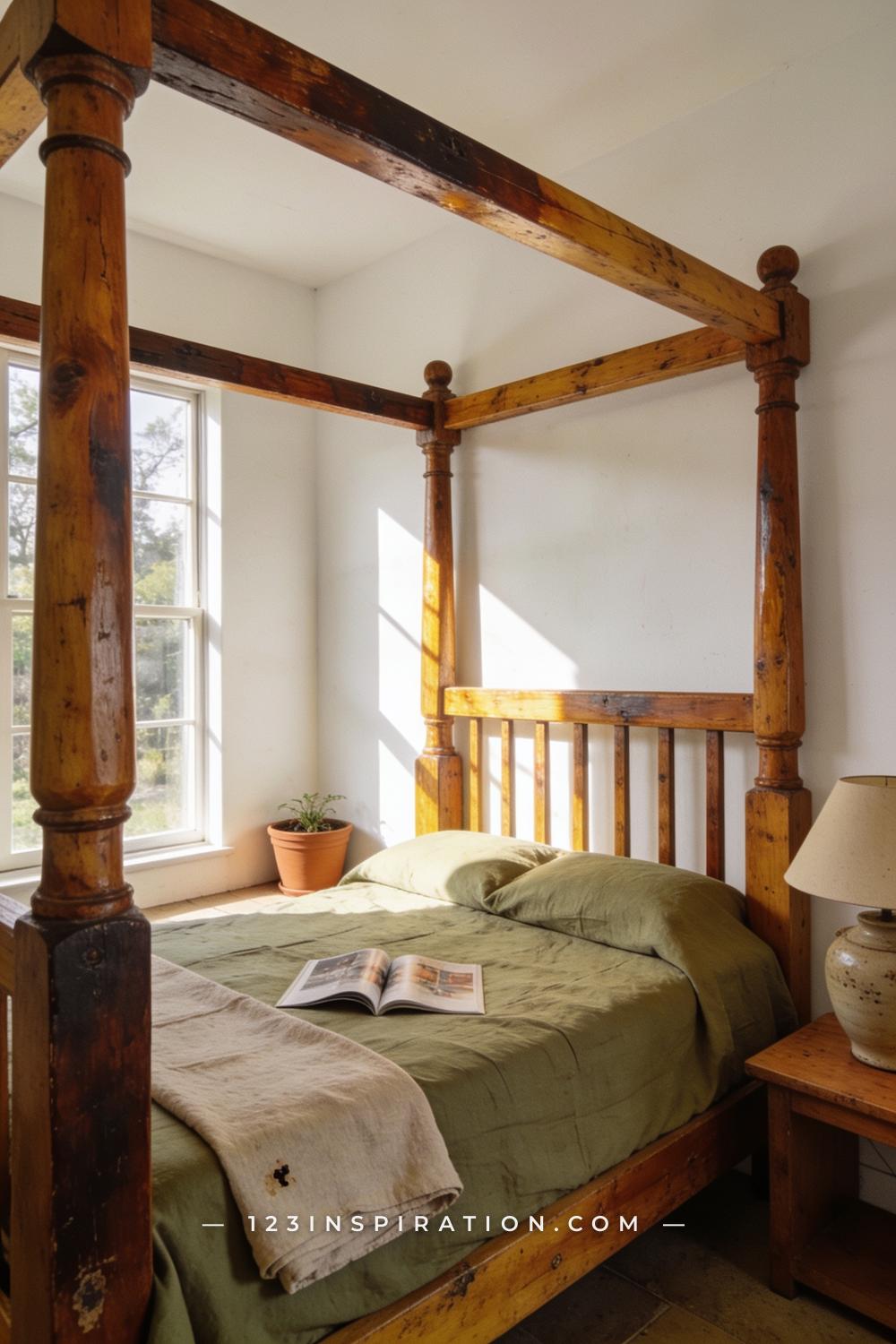
Reclaimed teak is the premium tier in reclaimed wood bed frames for a clear reason: teak’s natural oil content makes it dimensionally stable in changing humidity, resistant to checking and cracking, and naturally resistant to pests — all without any applied finish. A quality reclaimed teak four-poster requires nothing more than an occasional wipe with a damp cloth. It’s the low-maintenance end of high-end rustic.
The tonal range in reclaimed teak is wide — boards from outdoor sources (old decking, boat planks, plantation shutters) tend toward silver-grey; boards from indoor structural sources trend toward warm honey and dark chocolate. Frames that combine both sources can look inconsistent unless the variation is clearly intentional and dramatic. Ask the seller specifically where the reclaim source is from before purchasing.
Key Takeaway: Reclaimed teak from a single source reads as cohesive; mixed-source teak frames can look inconsistent — ask about provenance before buying.

9. California King Canopy Frames in Reclaimed Wood
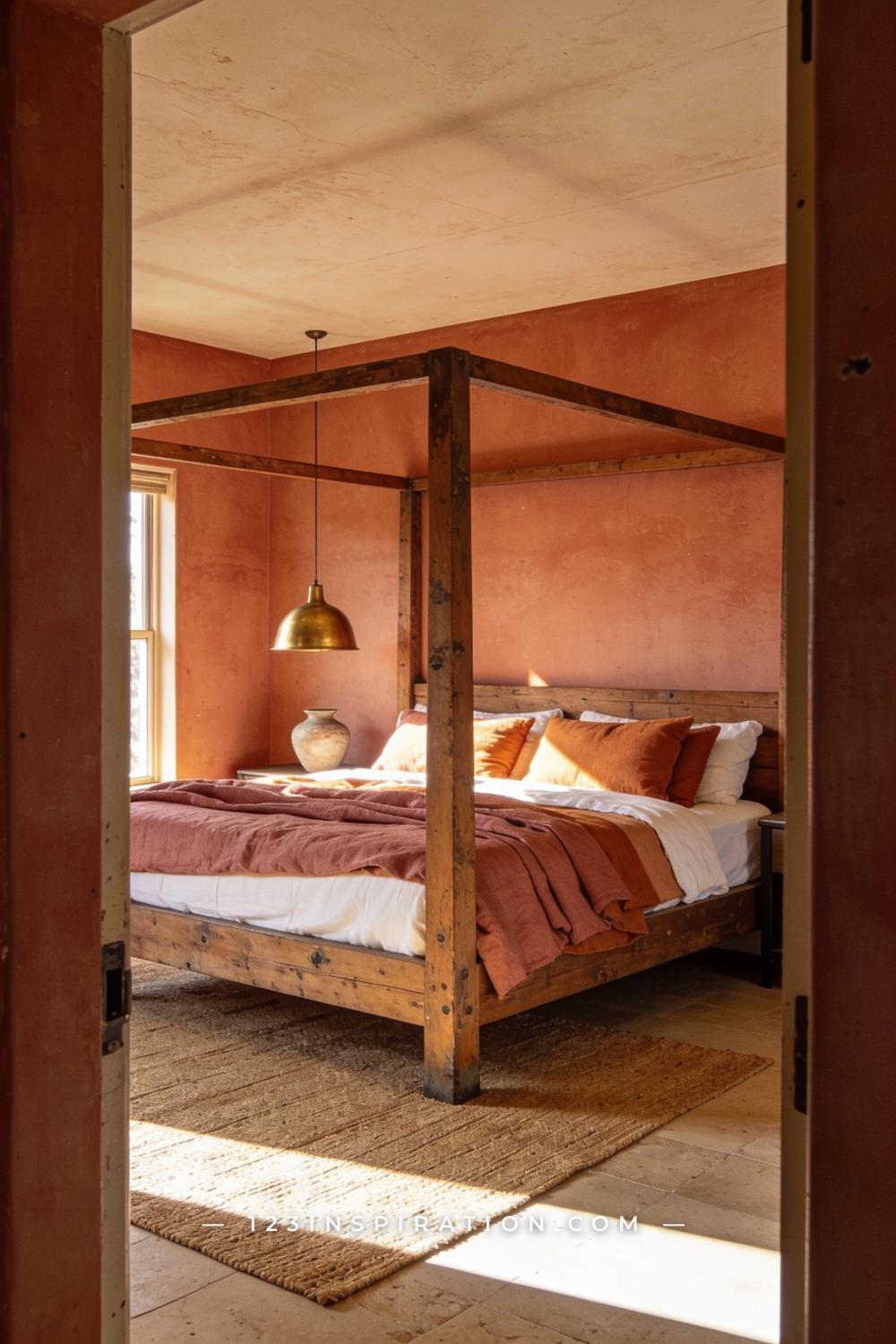
California king canopy frames in reclaimed wood are the statement piece of a master bedroom at a scale that actually fills the room rather than floating in it. The extra length of a Cal king (72 × 84 inches versus standard king’s 76 × 80) makes a canopy frame look appropriately proportioned in rooms over 14 feet in any dimension — the longer silhouette anchors a large space in a way that a standard king frame sometimes can’t.
One practical note worth knowing before purchasing: Cal king bedding is a separate category from standard king, with fewer options at the mid-price point. Verify your preferred bedding is available in Cal king dimensions before committing to the frame size — some buyers switch to a standard king specifically to maintain access to a wider bedding selection.
Key Takeaway: California king canopy frames work best in rooms over 14 feet long — and confirm your preferred bedding is available in Cal king before purchasing the frame.

10. Whitewashed Reclaimed Wood Four-Posters
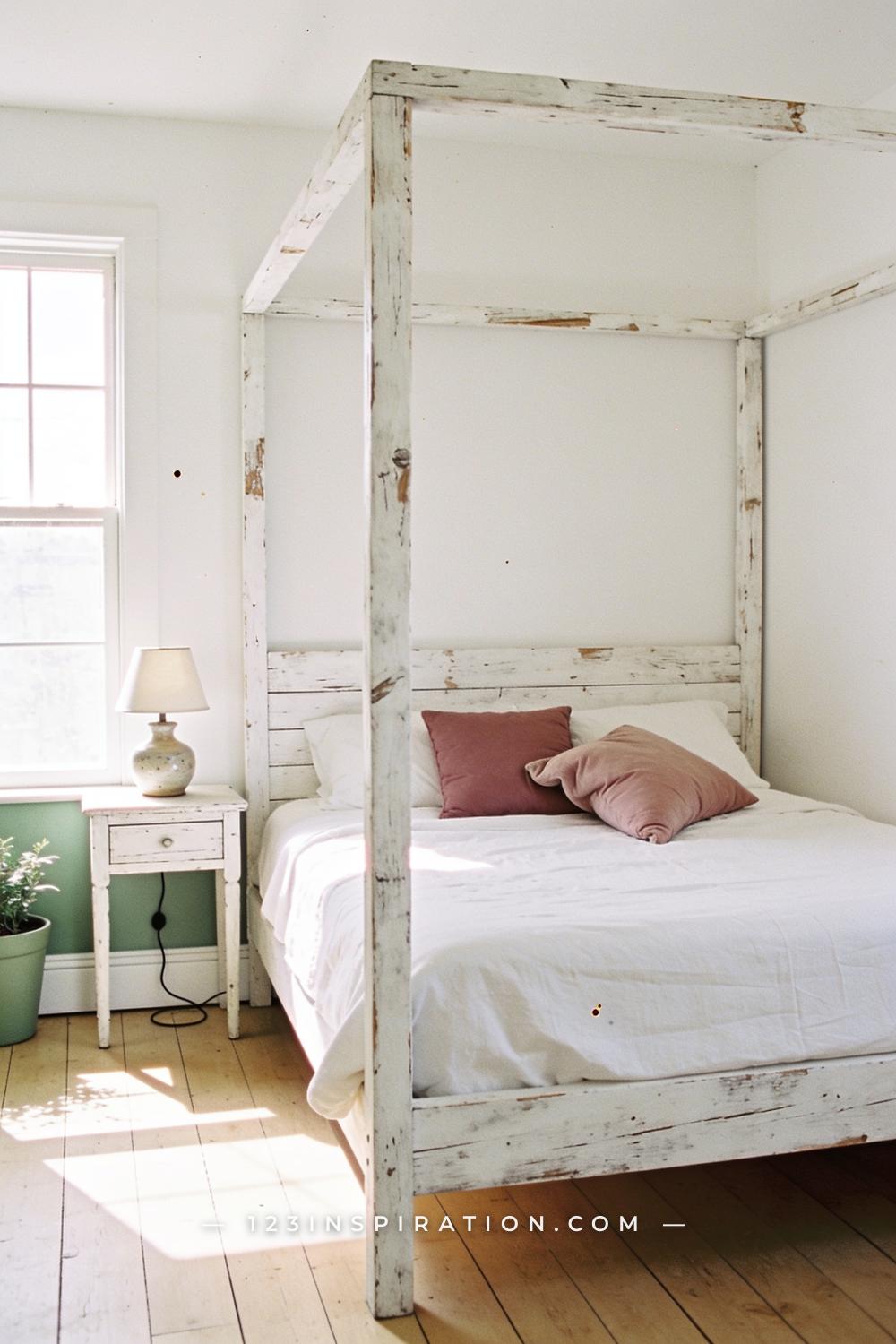
Whitewashed or limed reclaimed wood four-posters solve one of the most common buyer problems: wanting the texture and materiality of reclaimed wood in a room that doesn’t have enough natural light to support a dark frame. The liming or whitewash finish lightens the visual weight of the frame while leaving all the grain variation, knots, and patina of genuine reclaimed wood visible beneath the white layer. It reads as bright and airy while still being texturally rich.
Whitewashed frames pair naturally with warm white, dusty rose, and sage green walls — the light finish creates tonal harmony with almost any pale or mid-tone color. They’re less successful against deep jewel-tone walls, where the white frame can look bleached and cold rather than intentionally soft.
Key Takeaway: Whitewashed reclaimed four-posters bring texture into light-challenged rooms without the visual weight of dark wood — match them to pale or mid-tone wall colors.

11. Queen-Size Rustic Canopy Frames for Smaller Rooms
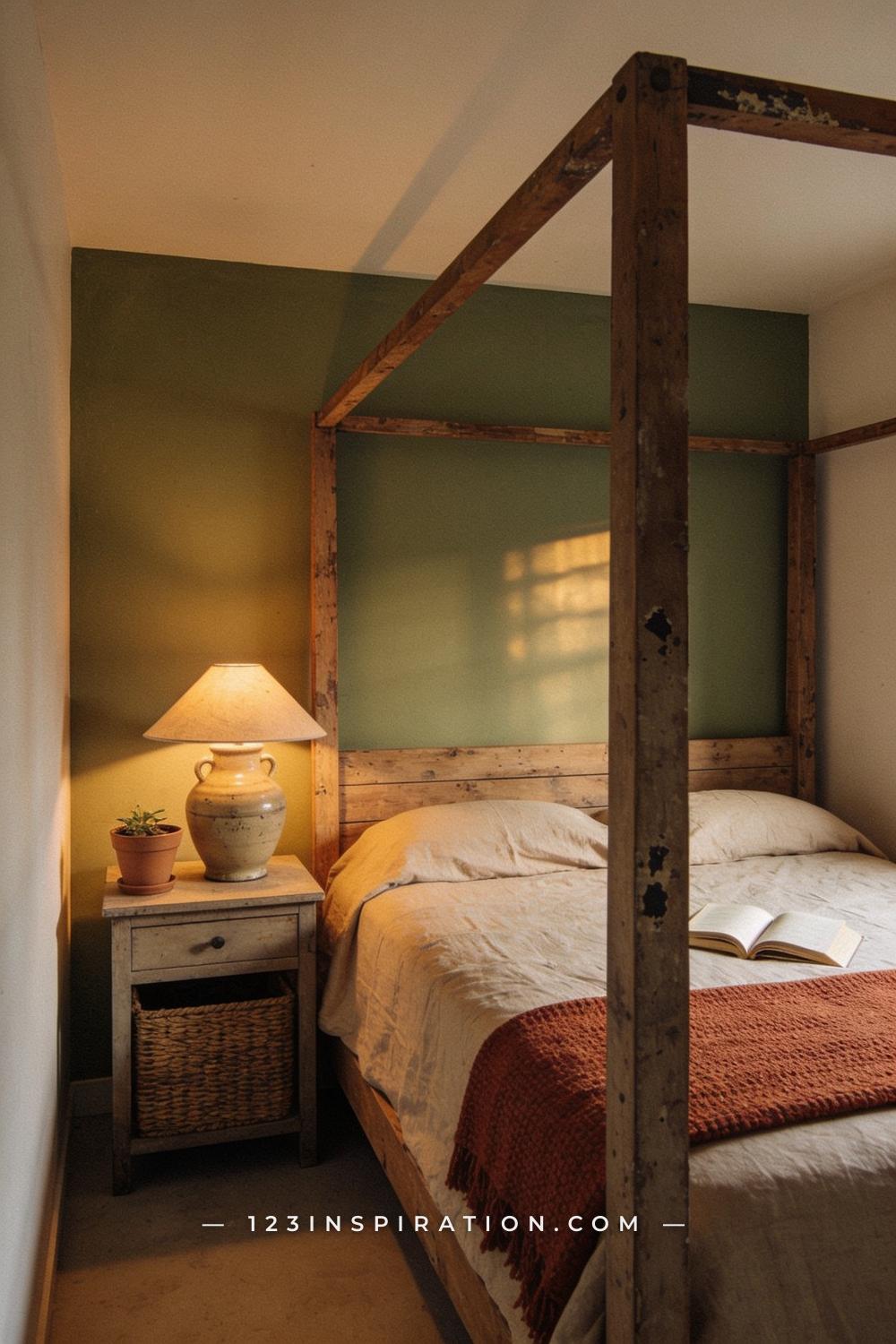
Queen-size canopy frames are frequently overlooked in the rustic category because so much of the aspirational imagery shows king-size frames in large rooms — but a well-proportioned queen canopy in a medium-sized room (10 × 12 feet, ceilings at 9 feet) can be the strongest design choice in the house, precisely because the frame fills the room in a way that makes the space feel intentionally curated rather than under-furnished.
The proportional rule for queen canopies in smaller rooms: the frame’s post height should be at least 4 inches below the ceiling. Any less than that and the frame looks wedged in rather than architectural. Most standard queen canopy frames run 78–82 inches in post height, which works in a room with at least 88-inch ceilings (7 feet 4 inches). Measure before ordering.
Key Takeaway: Confirm post height leaves at least 4 inches of ceiling clearance — frames that nearly touch the ceiling look crammed in rather than dramatic.
12. Rustic Four-Posters with Built-In Storage
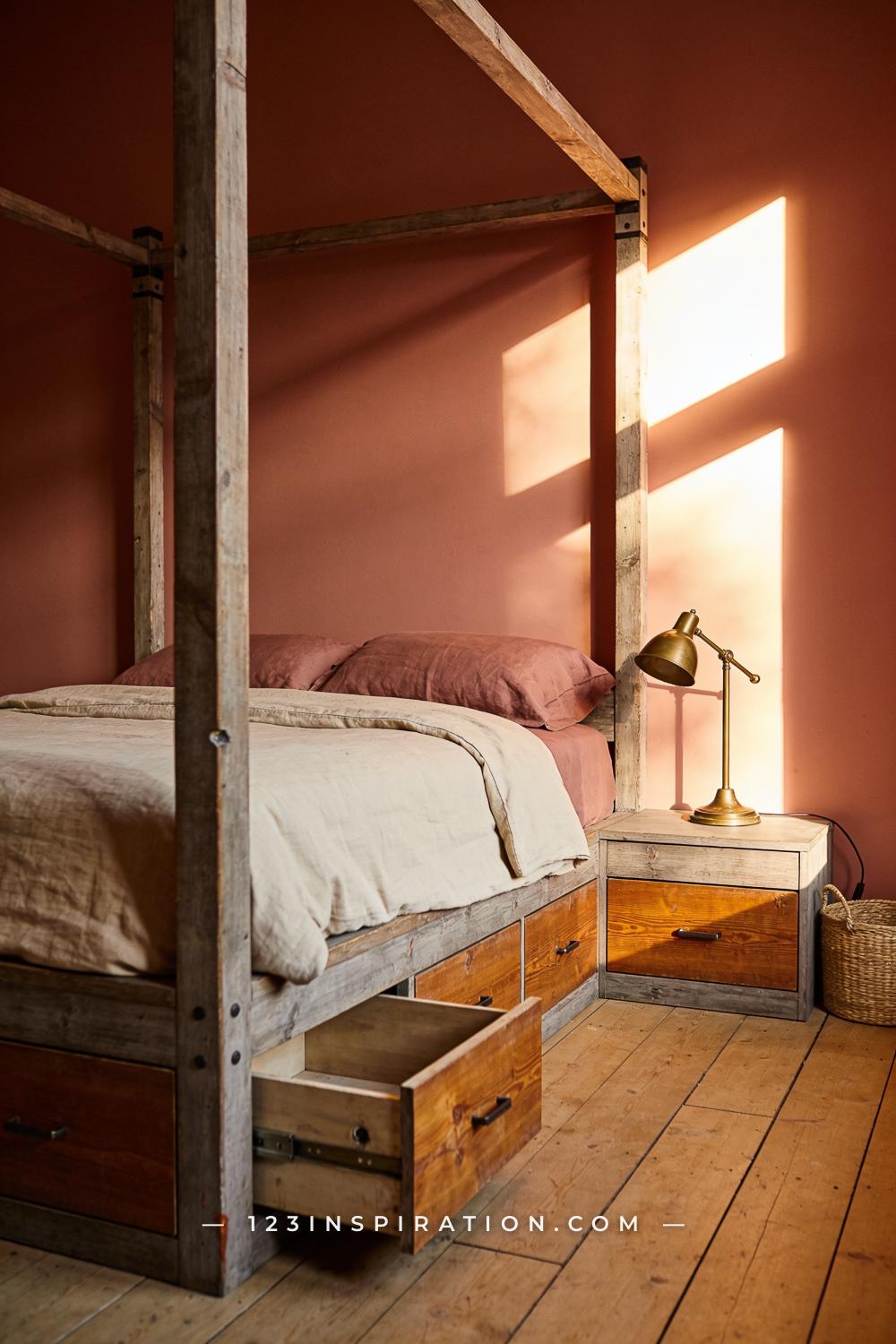
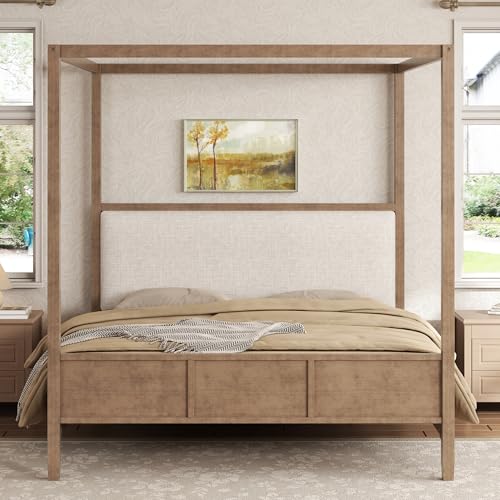
Reclaimed wood four-posters with integrated drawer storage are a practical evolution of the style for rooms that lack a dedicated wardrobe or closet. The storage sits within the footprint of the frame itself, which means the room gains functional capacity without adding a second furniture piece. In a 10 × 12 bedroom, this matters significantly.
The visual tradeoff is height: storage bases add 5–8 inches to the overall frame height, which raises the mattress surface and increases the post-to-ceiling ratio. In rooms with exactly 8-foot ceilings, storage-base four-posters often end up too close to the ceiling for the canopy rail to read as architectural. Run the measurement before assuming storage and canopy are compatible in your specific room.
Key Takeaway: Storage base four-posters raise the overall frame height by 5–8 inches — recalculate ceiling clearance before ordering if your room is under 9 feet.

13. Matching Reclaimed Wood Bedroom Sets
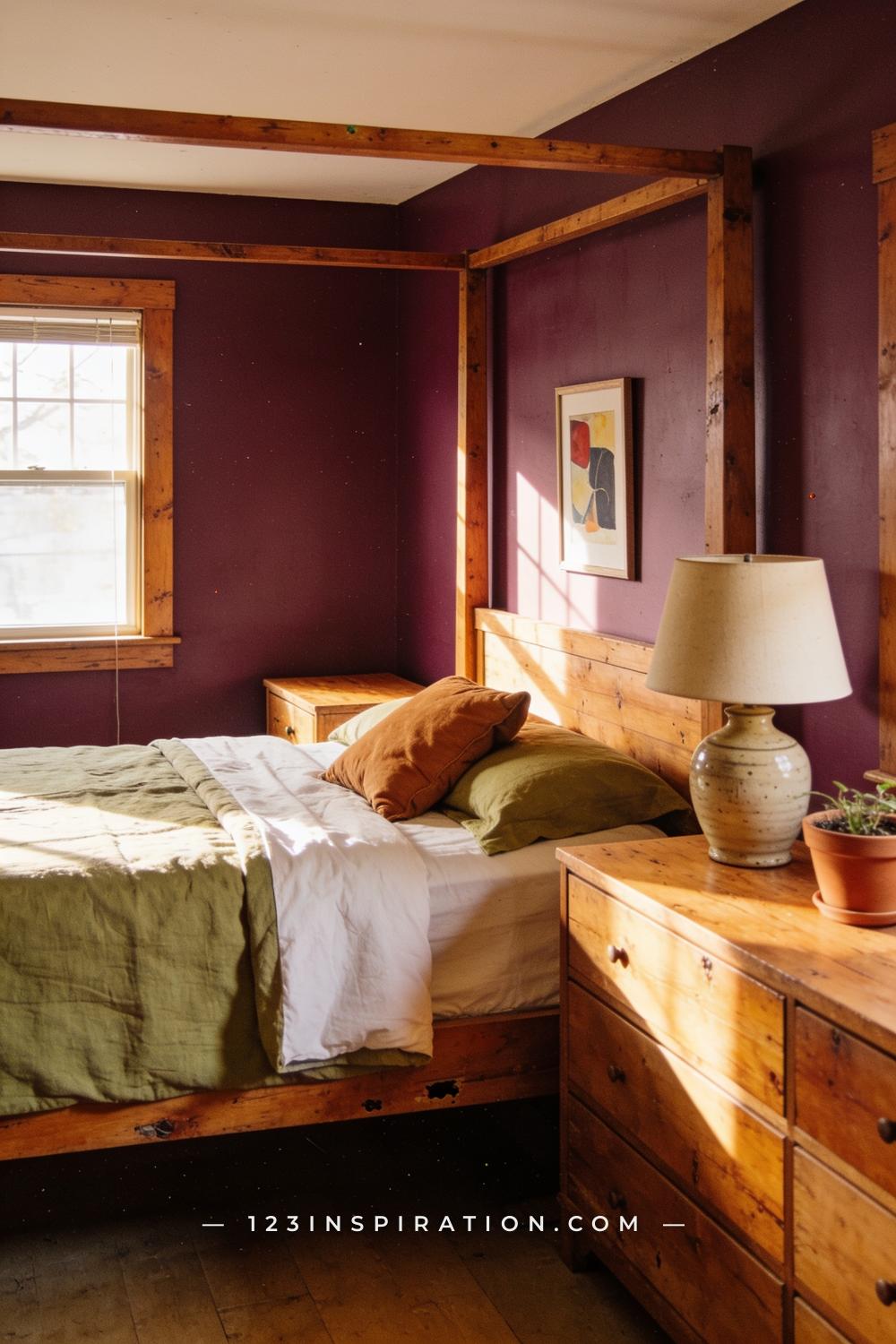
Full reclaimed wood bedroom sets — bed frame, nightstands, and dresser from the same collection — give a room a cohesive, intentional quality that mixing individual pieces sometimes struggles to achieve. The wood tones, plank widths, and distressing character match across all pieces, so the room reads as designed rather than assembled from different shopping sessions.
The counterintuitive note: a perfectly matched set can tip into feeling like a hotel rather than a home if every surface is the same finish with no variation. Introduce one or two pieces in a contrasting material — a brushed brass lamp, a ceramic vessel, a soft textile in a different texture — to break up the uniformity and keep the room feeling personal.
Key Takeaway: Matched sets create cohesion, but introduce one or two contrasting materials to keep the room from reading as a hotel suite rather than a lived-in home.
14. Rustic Canopy Frames in Rental Apartments
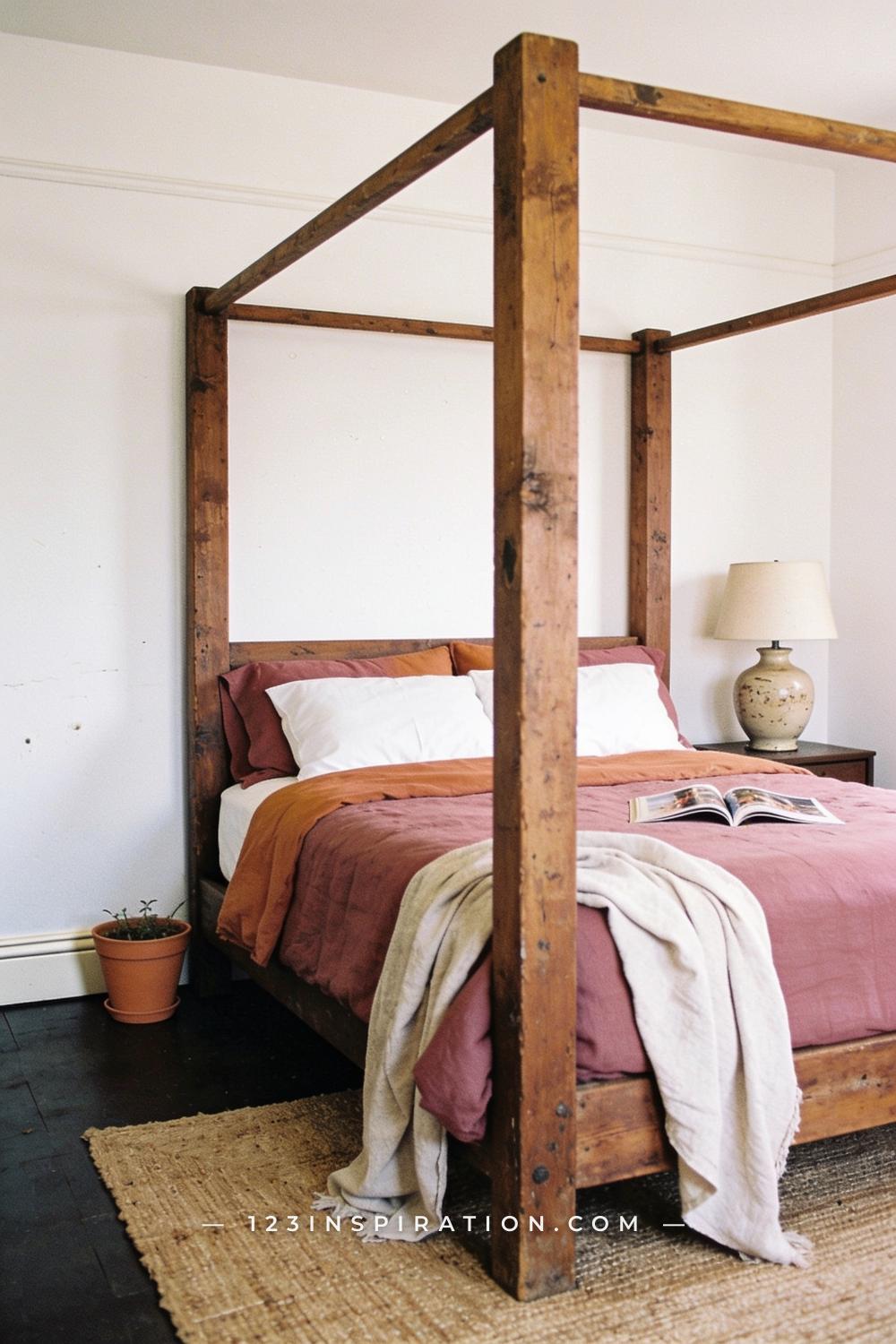
Rental apartments are not off-limits for canopy frames — the misconception is that canopy beds require wall attachment or ceiling hardware. They don’t. All four-poster and canopy bed frames are structurally freestanding; the posts support the top rails entirely through their own construction. You can place a canopy frame against any wall in a rental without drilling, patching, or landlord permission.
The only rental-specific consideration is floor protection. Four-poster frames concentrate the bed’s full weight onto four post feet, which can indent or mark soft flooring (vinyl, laminate, carpet with a thin underlayer). Floor protector pads under each post foot are a small purchase that prevent both floor damage and the slow migration of the frame across carpet.
Key Takeaway: Canopy frames are freestanding and require no wall attachment — they work in rentals, but add floor protector pads under each post to prevent surface damage.
15. Sourcing Genuinely Reclaimed Frames vs. Factory Distressed
[IMAGE: A wide medium-angle view of a workshop-style bedroom showroom space featuring two four-poster bed frames side by side for comparison — one with rich, irregular, genuinely aged reclaimed oak showing natural nail holes and color variation between boards, the other with suspiciously uniform distressing in a repeated pattern — warm afternoon skylight illuminating both frames from above, rough pl